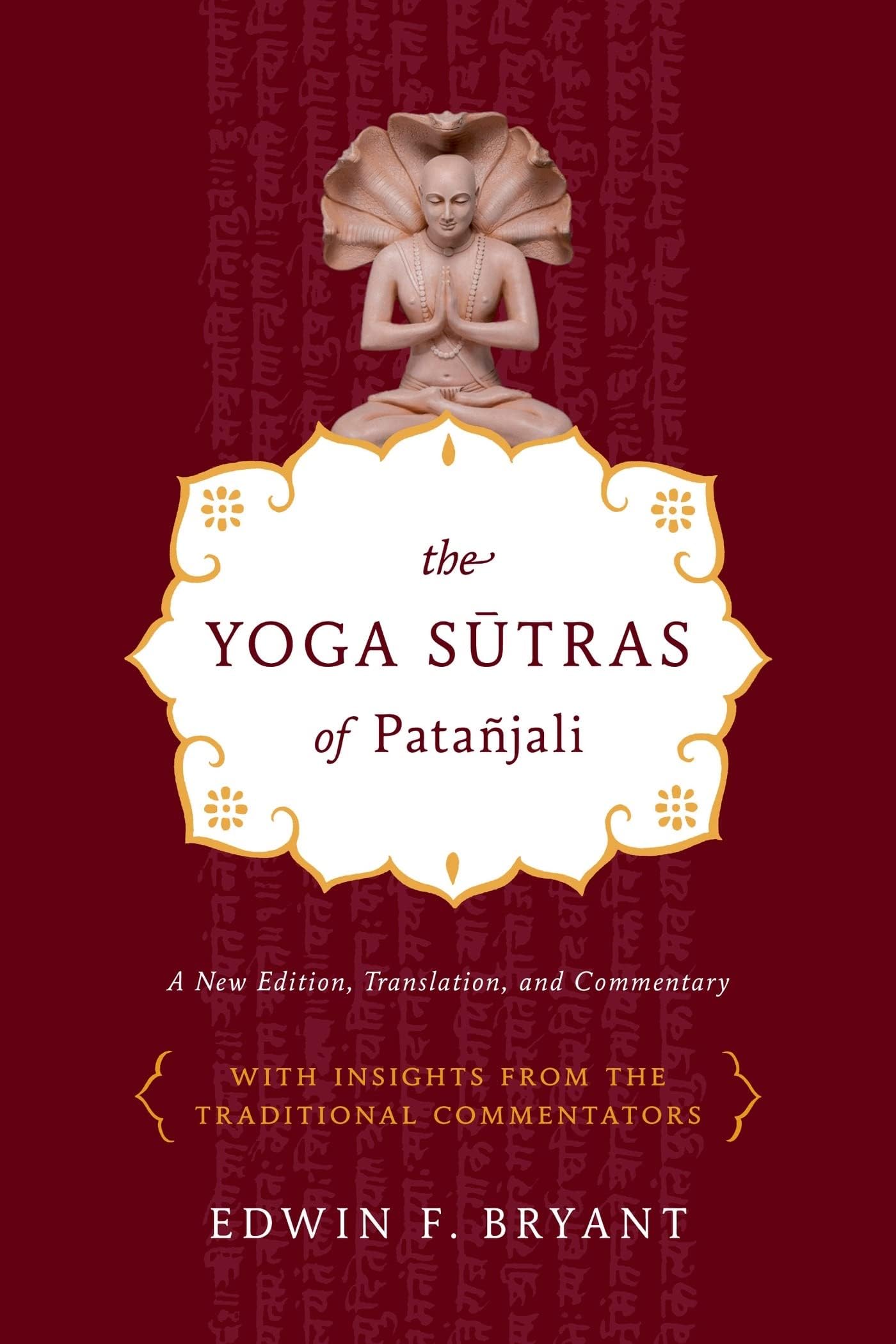
Yoga Sutras of Patanjali
Product ID: 75990467
Buy anything from 5,000+ international stores. One checkout price. No surprise fees. Join 2M+ shoppers on Desertcart.
Desertcart purchases this item on your behalf and handles shipping, customs, and support to British Virgin Islands.
Focuses on how to attain the direct experience and realization of the purusa: the innermost individual self, or soul. Review: Bryant is criminally unread and underappreciated - Once again, Bryant knocks it out of the park. I've read this book before. Funnily enough, I gifted it to someone else and read their copy a little by little, and used it as a reference, and only bought my own copy yesterday! It has the original sanskrit in the Devanagari script, along with transliteration, then the translation, and then commentary. Apart from the simple, clear translations, the best part about this book is the respect he gives to attribution, tradition and past commentators. He doesn't push his own interpretation. His method is to present the arguments and interpretations of previous reputable and typically indigenous commentators after each line of translation. He then also adds his own thoughts, which are intelligent, thought-provoking and well-informed. This is very similar to the traditional Indian methods of commentary. Like his other book about the Indo-Aryan debate (See my review of his fantastic "Quest for the Origins of Vedic Culture" here: https://www.desertcart.in/gp/review/RYR6TF8MXO711/ref=pdp_new_read_full_review_link?ie=UTF8), his method and attitude is so fair-minded and refreshing that even where you disagree with him, as I did, it is not a deal-breaker, because he quotes and paraphrases other views just as fairly. This is evidence, to me, of a clear mind and a dedication to truthfulness. I'd say this is an essential book for those interested in Yoga, and perhaps especially for Sanskrit scholars and aspiring indologists. Review: The best introduction to the Yoga Sutras - This is a book to read and read again. Most books on yoga are written by those who are masters or at least devoted practitioners. While there is nothing wrong with that it is very useful to read a book written with the objectivity of a dispassionate scholar. Bryant does that and because of that the book is a compelling read for sceptics, beginners and practitioners of yoga. Bryant's scholarship is evident as he references the various commentaries on the yoga sutras through the centuries and explores the connections between various darsanas of Hindu philosophy. And while he is objective on the subject it is evident that Bryant is not a dry academic. He is an ardent admirer of Patanjali's brilliance and that comes through. This book is a must read for those who are interested in yoga at any level. It's a book to possess, read, reread and gift.
| Best Sellers Rank | #652,098 in Books ( See Top 100 in Books ) #7,654 in Spirituality (Books) #16,587 in Health, Fitness & Nutrition #16,981 in Healthy Living & Wellness |
| Customer Reviews | 4.7 out of 5 stars 709 Reviews |
V**N
Bryant is criminally unread and underappreciated
Once again, Bryant knocks it out of the park. I've read this book before. Funnily enough, I gifted it to someone else and read their copy a little by little, and used it as a reference, and only bought my own copy yesterday! It has the original sanskrit in the Devanagari script, along with transliteration, then the translation, and then commentary. Apart from the simple, clear translations, the best part about this book is the respect he gives to attribution, tradition and past commentators. He doesn't push his own interpretation. His method is to present the arguments and interpretations of previous reputable and typically indigenous commentators after each line of translation. He then also adds his own thoughts, which are intelligent, thought-provoking and well-informed. This is very similar to the traditional Indian methods of commentary. Like his other book about the Indo-Aryan debate (See my review of his fantastic "Quest for the Origins of Vedic Culture" here: https://www.amazon.in/gp/review/RYR6TF8MXO711/ref=pdp_new_read_full_review_link?ie=UTF8), his method and attitude is so fair-minded and refreshing that even where you disagree with him, as I did, it is not a deal-breaker, because he quotes and paraphrases other views just as fairly. This is evidence, to me, of a clear mind and a dedication to truthfulness. I'd say this is an essential book for those interested in Yoga, and perhaps especially for Sanskrit scholars and aspiring indologists.
R**R
The best introduction to the Yoga Sutras
This is a book to read and read again. Most books on yoga are written by those who are masters or at least devoted practitioners. While there is nothing wrong with that it is very useful to read a book written with the objectivity of a dispassionate scholar. Bryant does that and because of that the book is a compelling read for sceptics, beginners and practitioners of yoga. Bryant's scholarship is evident as he references the various commentaries on the yoga sutras through the centuries and explores the connections between various darsanas of Hindu philosophy. And while he is objective on the subject it is evident that Bryant is not a dry academic. He is an ardent admirer of Patanjali's brilliance and that comes through. This book is a must read for those who are interested in yoga at any level. It's a book to possess, read, reread and gift.
N**A
Love it!
Brilliant book with an in-depth analysis of each sutra. If you're the completely new to Indian Philosophy or Yoga Sutras then this might be a bit overwhelming. But for those familiar with the literature this is a perfect second/third book to pick up and explore the sutras further.
A**R
If you are seeking for ancient knowledge plz go ahead.
People who are interested in seeking ancient knowledge it's must to read ...yoga and it's history and it's teaching to mankind ..totally it's a vast knowledge which is simplified but kept at it's original ..so guys go head and pick one.
V**U
it is a great book, recommended by a teacher (sri
Really, it is a great book, recommended by a teacher (sri.Aravinda Rao IPS Rtd.). I never thought a foreigner can do so much research into my Culture and write a book. I thank both teacher and writer. Anyone who is interested in Yoga (beyond physical poses), the intention of the author Patanjali is great, has to read this book.
Z**R
Must read and do
After reading this book I'm feeling that we are so much backward The person who is mentally and spiritually balanced is the forward one ☝️
S**A
Great for study
A very insightful book. I'm impressed by the introduction chapters on history of yoga. The commentary on each sutra was just perfect-not too long or not too short. The appendix consists of the Devanagari, transliteration and translation of sutras which is very useful for quick glance.
Z**K
Must read for any one on spiritual journey
This book is amazing. It is very informative. The author has given comparisons from Gita, Upanishads, Buddhists and Jaina texts.
N**H
Genial. Ein unvergleichlich tiefer Einblick in Patanjalis Yogasystem.
Beste Yogasutrā-Ausgabe. Klare Empfehlung. Derzeit unangefochtener akademischer Standard. Alle Kommentare von Vyāsa über Shankara, Vacaspati, Vijnanabhiksu, Bhoja Raja etc. zusammengefasst, die Unterschiede herausgearbeitet und zu einem neuen komparativen Kommentar vereint. Einen detaillierteren und multiperspektivischeren Einblick in die Samkhya-Yoga Lehre des Patanjali findet man in keinem anderen Buch! Außerdem beinhaltet es auf den ersten ca. fünfzig Seiten ausführliche Hintergrundinformationen, welche das richtige Verständnis der Sūtras überhaupt erst möglich machen. Klare Kaufempfehlung.
S**H
For yoga teachers
Big and Beuatyful
F**O
Uma edição esplendorosa!
Ótimo, simplesmente perfeito. Definitivamente a melhor versão dos yoga sutras para estudiosos e praticantes. O livro é organizado de uma maneira que fica extremamente fácil encontrar cada Sutra e vem com uma introdução esplendorosa de toda história do Yoga (samkhya-yoga). Sem contar na explicação detalhada de cada um dos sutras. Ótimo!
A**A
Not dry or academic, just thorough.
I am thoroughly enjoying this translation. I am currently also reading the classic Thibaut translation is the Vedanta Sutras with commentary by Shankara and I can say that without a doubt, this reads much easier. For those who found this commentary dry or impenetrable, I wonder if they read the great introduction that explains the Yoga sutras in context of the philosophical systems of ancient India or in other words, the greater historical culture of the Yoga sutras. There are also convenient chapter summaries that are collected at the end of the book that you can read to get into the mindset for reading a chapter. I particularly like how Bryant commits to the repeated uses of the Sanskrit terms and doesn’t depend on English words that fail to catch the subtle differences of meaning between the two languages. This encourages the reader to leave at the door their presuppositions and prejudices that they carry unknowingly being dependent on English. Another great thing is that Bryant explains not only the standard Vyasa commentary, but also connects it to many other commentators including the previously mentioned Shankara, who was a Vedantin and not a Yogin. Bryant will even connect the Sutras in similarity and contrast to Buddhism. Giving context to the different commentaries is essential because in the classic commentaries themselves there are a lot more esoteric and foreign references to scripture, mythology, and other thinkers that aren’t as explicitly explained. I think this book is most valuable for those who might not have been aware of the philosophical depth of the culture of Yoga. Bryant is oftentimes critical of the mass commercial culture that has appropriated Yoga and I think his translation and commentary is perfect for those who want to take the time and explore the ideas unique to Western thought and develop a deeper understanding of what goes into any action, practice, or lifestyle. For those who just want a feel good shallow explication of Yoga that satisfies the minimal threshold of what it is to be “cultural”, then reading any set of Sutras and their commentary is going to disappointing anyway. And for all their complaints about it being too academic, I think that based on a certain prejudice of what “academic” is to them. Because this does not read at all like a philological text or western philosophical treatise.
R**I
Libro essenziale sul raja yoga
L'autore interpreta i vari sutra con l'aiuto dei più importanti commentari esistenti: libro fondamentale solo per i veri studiosi del raja yoga, lo yoga della meditazione
Trustpilot
2 months ago
3 days ago