📊 Unlock your body's secret language—know your glucose, own your health!
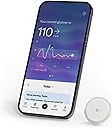
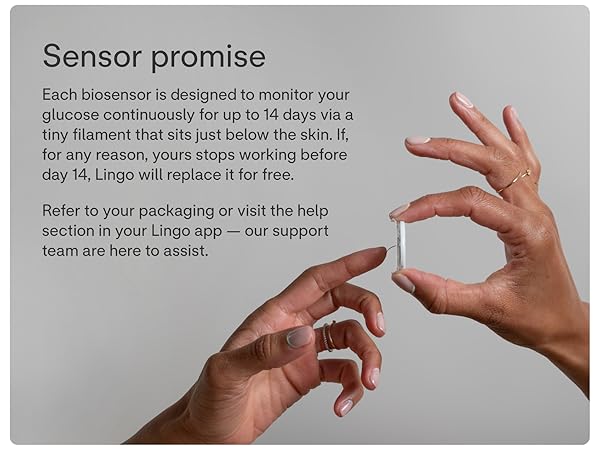
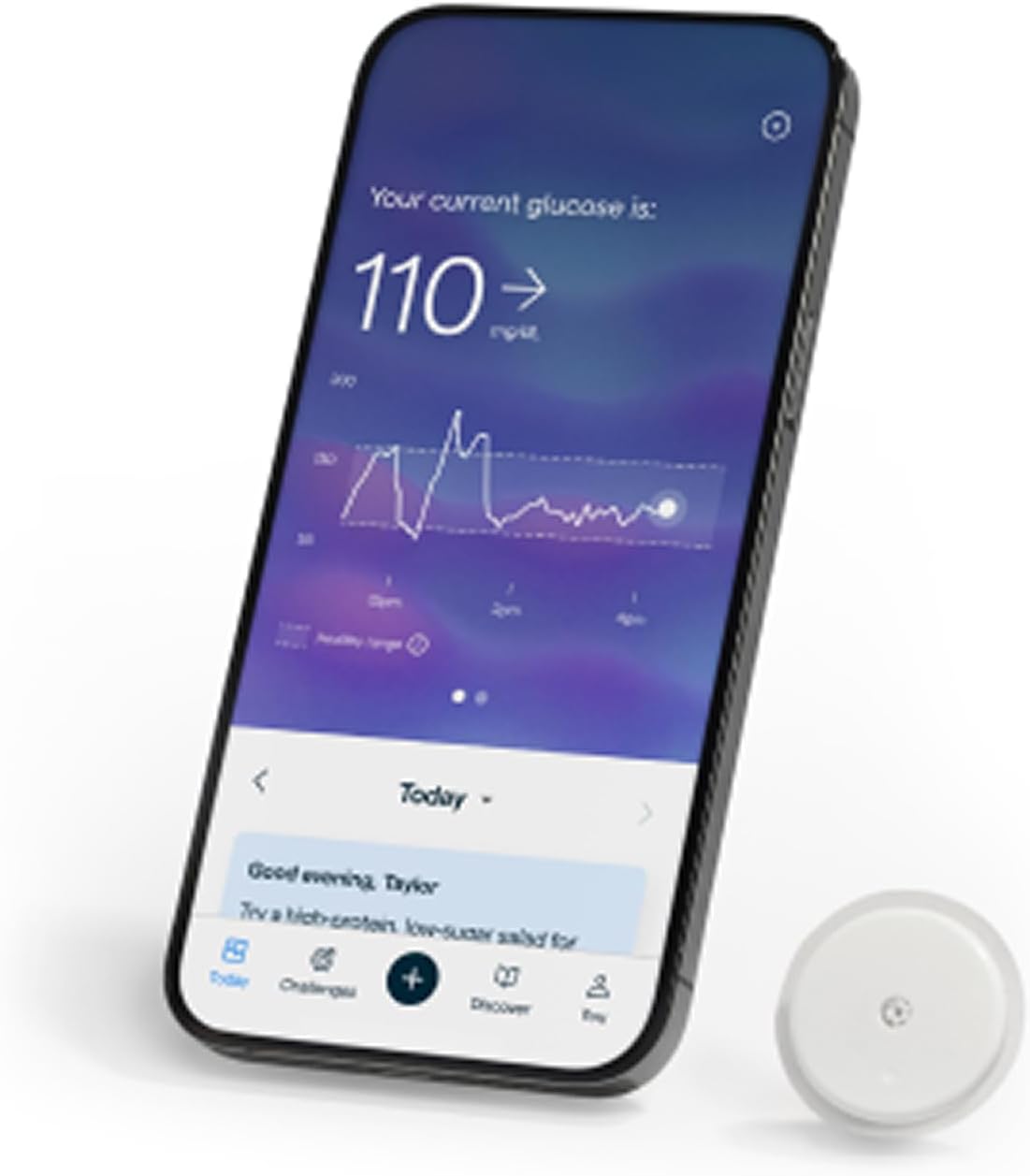
The Lingo Continuous Glucose Monitor by Abbott is a sleek, water-resistant biosensor designed for iPhone 11 and later users in the US. It delivers up to 14 days of minute-by-minute glucose tracking via Bluetooth, empowering users to understand how food, exercise, and lifestyle impact their glucose levels. Backed by Abbott’s decade-long CGM expertise and a free replacement guarantee, Lingo offers a seamless, data-driven path to healthier habits and better well-being.


| ASIN | B0DRVD8TH8 |
| Battery Cell Composition | Silver Oxide |
| Battery Life | 14 days |
| Battery cell composition | Silver Oxide |
| Battery life | 14 days |
| Brand | Lingo |
| Brand Name | Lingo |
| Customer Reviews | 3.0 out of 5 stars 3,940 Reviews |
| Global Trade Identification Number | 00357599848002 |
| Included Components | Package contains the biosensor and the biosensor applicator |
| Item Weight | 0.21 Pounds |
| Item weight | 0.21 Pounds |
| Manufacturer | Abbott Lingo US |
| Model Name | Lingo |
| Model name | Lingo |
| Part Number | 77263-02 |
| UPC | 357599848002 |
| Unit Count | 1.0 count |
D**L
Installing the app
If this sensor is useful or not, I will never know... because I could not get it to work. To apply the sensor to the arm is easy and you will not feel a thing. To install the app is a total different issue. I have a Samsung Phone and I use this phone exactly for the reason intended by Alexander Graham Bell and nothing else... like most seniors my age. I do not care one bit for all this nonsense and pretend functionality on a modern phone. Actually most phones are virtually unusable because the keyboard is too small for old fingers. But I did managed to "register" for a Google account. They of course ask me all sorts of questions which are none of their damn business... but I suffer with dignity so I go to the Google Play Store and search for "Lingo" and installed the app. The app started with asking me all sorts of questions... again, none of their business. I paid for the sensor so I should be able to use it, but no... they are more interested in my info. Then 10 or 20 pages later (i did not count) finally the page which read: Ready To Scan... I did hold the back of my phone directly onto the sensor which I had already put onto my arm. and .... nothing... then the message... Pairing Error... I tried numerous times Then I called the support line and as expected a gentleman with a heavy indian accent ( you recognize the accent when they call you and try to con you out of your money, never pick up the phone when you do not recognize the number). Obviously the guy talks too fast, uses unnecessary words and you cannot understand a thing. This went on for good 1 hour and nothing. among other things, he asked me to delete the app, reinstall this and then search for a red dot... ??? what red dot??? I still do not know what he meant. Anyway I told him, that I cut my losses and tell everybody about my ordeal. Then he suddenly offered me to replace the sensor. Very well I am down $50 already, might as well... arrives in 2-3 days, meaning 4-5 days because of the weekend. Why is there no "app" for this sensor on a PC. After all A PC has a screen I can actually see and a keyboard which does not require baby fingers. And for Pete's sake, do not ask me all these dumb questions, which are none of your business. If the replacements ensor works, I will try it... but then never again. Simply measure your morning fasting BG like before and that is that. Minute to minute updates are superfluous and expensive technology and a pain in the rear. 12/21/25 1:14pm Important update. I did not want to wait for the replacement and ordered another one yesterday from Amazon same day delivery. This one worked, but did not give me any reading for 1 hour and afterwards it was 20 points too low compare to the finger stick (73, 92). however this morning it was a lot better, In fact just now it reads 92 and the contour next fingerstick reads 95. I am more than happy with that. To be sure I get some benefit from this device... after all I learned that overnight my BG dropped to 55 for a brief moment... I seriously doubt that. All you can see trends, and I am lucky with this one, it is even accurate.... but I am an EE and I did work with large continuous datasets which were contaminated with large random errors and judging by the graph, it looks very much like a data set processed using a Markov Process. This is a mathematical process to get the best up to date measurement even when the whole data set is contaminated with random errors. But there is no free lunch in mathematics, nothing beats accurate measurements, no amount of math and statistics will make it better, even when it appears like that. In the moment I am happy... lets see, if the other reviews have a point. besides, why do you want to measure something you already know? Sugar and refined carbohydrates spike your blood glucose... its common knowledge... don't eat junk food and you do not need a CGM, Everybody who wears a CGM or reads this post, has already done the most important thing, which is educating oneself about nutrition... everything else is superfluous. Important update 05/Jan/2026 I am on my 2nd sensor. They last only 14 days for whatever reason, most importantly I guess, the glue will not stick much longer than that, probably the skin will secrete oils which dissolve the glue??? The good news was, that removing the old sensor was easy and it left no mark on my skin other than a tiny hole where the sensor was inserted. Unfortunately, the second sensor is also about 20 points too low, relative to the test strip. Of course one could argue that the test strips read 20 points too high, which I seriously doubt. Consecutive testing with test strips (Contour Next EZ) show readings within 5 counts of each other using brand new test strips. Overnight I get readings of 55 with the CGM, which is utter nonsense, because I am a recovering type 2 diabetes patient... even a reading of 75 overnight is hard to believe. The only useful thing I have discovered is that overnight my BG drops significantly. Morning glucose measurements are virtually useless, because of the classic BG spike after waking up. As soon as you out of bed, the BG is already on the rise and it can go up 30 maybe even 40 points within minutes and you have no way of knowing on which part of the curve you are measuring. So again, I have a warm feeling that maybe I have conquered my insulin resistance, just add 20 points to whatever the CGM tells you and when this is under 80 during the night, you maybe ok... still avoid carbs for the rest of your life
H**A
Don't Listen to the Bad Reviews - Lingo is Fabulous
This review is on the Lingo Continuous Glucose Monitor (CGM) made by Abbott. I love it!! Let me repeat so you understand...I love it!! I researched the top CGM units. The Dexcom Stelo and the Abbott Lingo are the top 2. The later model is a little cheaper online. However, the Dexcom Stelo is a tiny bit more accurate. These meters are testing *interstitial fluid* (in the tissues), so it’s going to vary and and not be as accurate as if you did a finger prick (using your blood). I tested my Lingo against a finger prick and there was a 10 point difference from my finger prick. The Lingo was lower than the actual finger prick. That being said, I knew to add 10 points to my readings. I'm prediabetic and have been having hypoglycemia. I couldn't figure out why and what was causing it. And after using the Lingo I found that my assumptions were dead wrong. The Lingo allowed me to tract my meals, exercise and stress levels. The information I entered into the Lingo app gave me real time readings. Matter of fact, you get real time readings 24/7. At any given time during the day I could look at the app and it would tell me what my glucose reading was. If it was too low, I knew it was time to eat something to bring my glucose level back up to my normal range. My satisfaction with the rest of the product and seeing appropriate fluctuations based on meals/exercise/stress level give me confidence that this is likely pretty accurate. One monitor lasts approximately 2 weeks. I've been wearing mine approximately 12 days and I'm very happy with this products performance. I don't like needles and I just knew the applicator would pinch or hurt me when applying the monitor. But I never felt anything when I applied the monitor. I was totally surprised and had to check to make sure I'd applied the monitor. It's very easy to use. The little round monitor is about the size of a quarter and fits snugly on your arm. I see reviews stating theirs fell off. I don't know why there's didn't stay on but there are patches you can purchase to place over the Lingo to make the monitor stays on if need be. The Lingo and Stelo CGMs are not medical grade glucose monitors. If you want a medical grade CGM your doctor will have to prescribe one for you. Medical grade CGMs will alert you when having hypoglycemia or hyperglycemia episodes. However, most insurance will not cover the cost unless you are a diabetic and on insulin. Therefore, there's the alternative monitors (Lingo and Stelo) for people like me. Amazon offers excellent pricing with delivery, as well as Ebay. Do your research to see which monitor works best for you. Check out Reddit.com for continuous glucose monitors. For instance the Dexcom Stelo allows you to take a picture of your food and upload what your eating. Pretty Cool! But readings only update every 15 minutes vs. instantly on Lingo. Decide which monitor you think would work best for you and then jump in. The Lingo will also help you make better food choices. I've actually lost 3 lbs in the time I've been monitoring my glucose. I encourage you to read the review posted by "Louise". It's very informative and goes into much more detail on the Lingo monitor. That particular review was the reason I went with the Lingo after doing allot of research. Also, Dexcom has a program where you can get a Dexcom G7 (medical grade) monitor to try for 14 days at no cost to you. But you will need a doctor's prescription for the medical grade version faxed to Dexcom. I believe Abbott has the same type of trial. I'm extremely happy with my Lingo and plan on using it for a couple more months. It's that good and my health is very important to me.
G**L
Update: works intermittently, very frustrating
Update: This device is sporadic at best. The app loses connection with device all the time. I got this over the competitor brand because it updates more frequently, but that doesn’t work when you have to wait all the time for it to reconnect and grab the data from the device. I’m also not confident of the readings. And if you enter in data like what you eat or exercise, apparently it arbitrarily removes data from its analysis as a result - that doesn’t seem helpful to me. I’ll continue to update as the 14 days progress. Right now I’m at a 2/5. Put it on today around 4pm. Takes an hour to start working. Stopped reading a little after 10pm. At first it said, wait ten minutes and check back. Now it says wait 5 hours. My phone is rignt next to my arm. The spotty nature of the device is disappointing. I’ll keep it on and see how the next 14 days go and update my post, but for now, this is not even worth 1 star.
M**K
Often inaccurate, sometimes glitchy app, but still worth it.
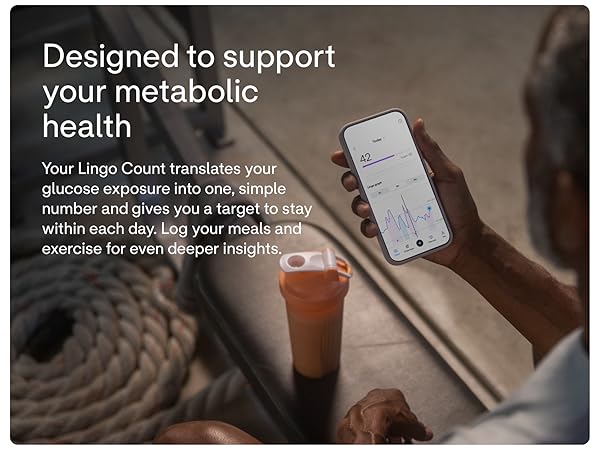
I'm new to CGMs (continuous glucose monitor), but recent health issues required that I keep a closer eye on my glucose patterns than is possible with the "jab and dip" variety of testing devices. So I did a little digging and decided to try this Lingo monitor. I'm now on my fourth monitor, and can report the following. First application of the monitor was a little tricky, just because I had never seen or used the applicator before. However, once you've done it once, every time after that is simple. They recommend you always use the same arm, and just move the location around so that you're not sticking the monitor on the same patch of skin every time. I've been alternating arms anyway, just so I don't have to think about inadvertently putting a new monitor anywhere on the same patch of skin I just used. Initial download/startup of the app is a bit of PITA, but once you've gone through all the menus, questions and authorizations, and have it installed on your phone and linked to the monitor, it takes about an hour for each new monitor to finish "analyzing" your skin and start transmitting glucose data. Once installed the monitor is "water resistant," and I've had no problems at all with normal showering, exercise, etc. You can even swim with it on for up to a half-hour at a time. It has thus far stayed put until expired (each monitor lasts about 2 weeks), and removed/replaced by a new monitor. A lot of reviewers have complained that this monitor system is "not accurate," and that is often true ... but it's not because there's anything "wrong" with the monitor. It's because this device uses a different kind of tech than what's used for the typical "jab and dip" glucose testers. This monitor does not take a direct reading from contact with any blood or blood vessels in your arm. It reads from the "interstitial" fluids/tissue in the area just beneath the surface of your skin. So, in my experience so far, the reading given by this monitor is a "lagging indicator" of what's actually happening at the moment with your blood glucose. If it's rapidly going up, this monitor's reading will lag behind the actual glucose reading you'd get from a "jab and dip" test. If it's rapidly dropping, same thing ... this monitor will read higher than your actual glucose rate. The more stable your glucose is over a longer period of time, the closer this monitor's reading will be to to your actual blood glucose at the moment you check it. Point is, and where this device and its related app really rock, is the way they provide you with continuous "tracking data" on what your glucose is doing over long periods of time ... by the hour, by the day, over weeks of time. As long as you're wearing an active monitor, the app just keeps accumulating data, and showing you the results in "real time." This function has been invaluable to me, and in a matter of weeks, has taught me more about my diet/eating patterns than anything I ever learned/understood over 20 prior years of intermittent "jab and dip" tests. For easy access to that kind of "information," I'm more than willing to trade off EXACT accuracy at every moment. Any time I want a more exact reading, I can (and still do) use the old "jab and dip" variety of tester. I have had a few issues with the monitor losing contact with my phone, and even had to re-install the app once, but so far, it's never lost any of my past data, and I've now asked my regular doc to prescribe a CGM for me, so that I can get the monitors supplied regularly through my insurance, rather than me having to buy them retail through Amazon. This "Lingo" monitor is made by Abbott, who also makes what appears to be an identical monitor known as "Freestyle." I don't know, but I think the only difference between the two is marketing. The "Lingo" label is marketed/sold direct to consumers, and I think the "Freestyle" label is marketed/sold through doc prescriptions, insurance, etc. In any event, I've now become comfortable with this tech and what it does for me. I now see it as a highly valuable tool in my never-ending effort to maintain control over my diet, health and quality of life.
O**A
Mixed Feelings Inaccurate Readings
Lingo is easy to put on and and connect to your phone upfront. But it constantly disconnects, which then requires you to turn your Bluetooth on and off and then reconnect it in order for you to see your account out of 10 of them to have been completely dysfunctional, but they do give you your money back pretty easy and or send a replacement the readings though are pretty poor the CGM and a traditional finger poke monitor are different classes obviously but I didn’t realize how far apart the readings would be my Lingo will say that my sugar is below 55 where my finger poke will say I’m at 90 almost every morning. It is off by 15 to 25 points. One thing I do find helpful. That whether the readings are right or wrong, it does help me to see which foods negatively impact my blood sugar more than others. So if you’re just wanting to see what’s happening in your body, it can be helpful but if you are a diabetic, I need accurate reads then I would think twice about using Lingo alone.
Trustpilot
2 days ago
5 days ago