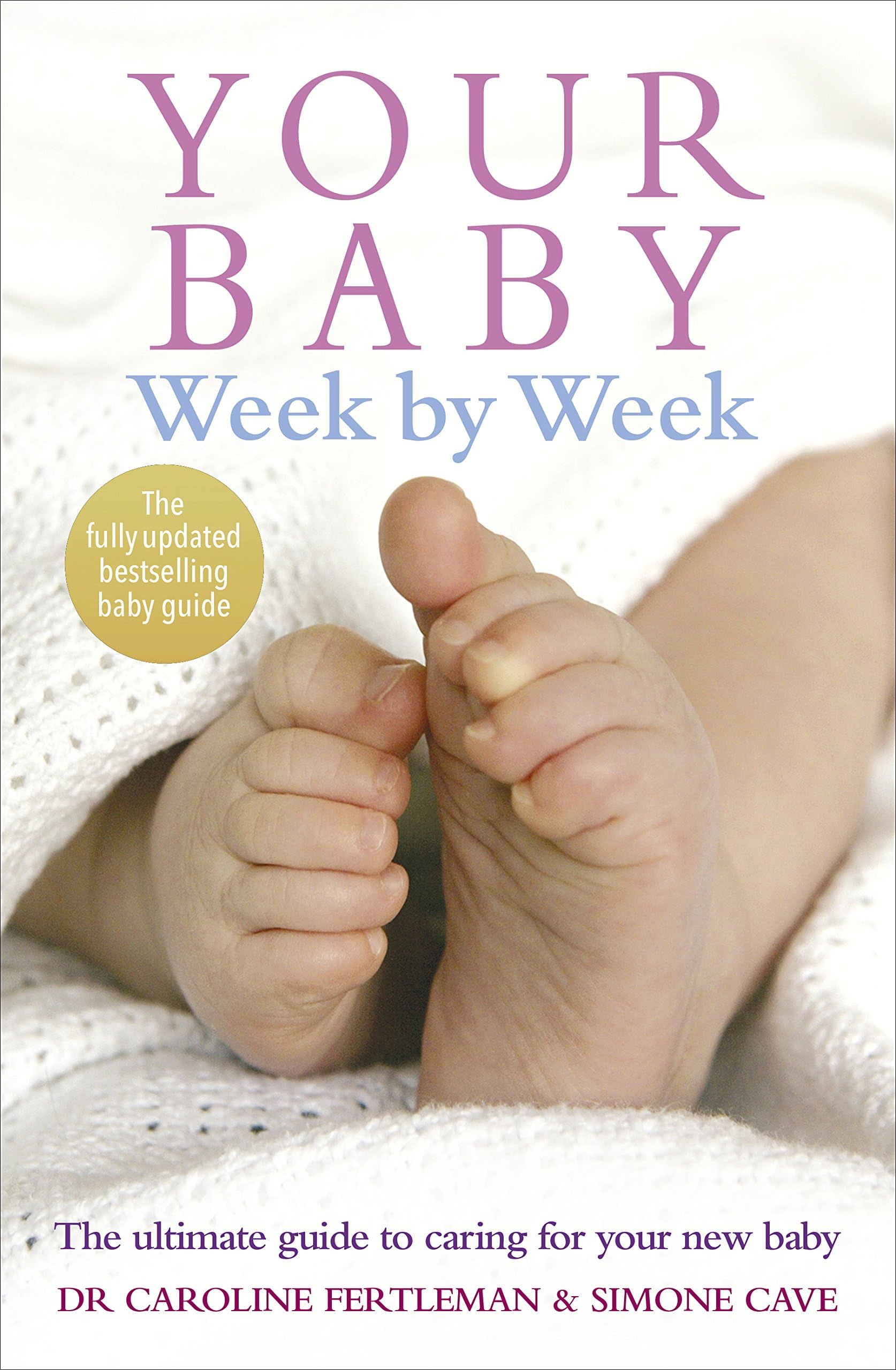
Your Baby Week By Week: The bestselling guide for new parents on caring for your new baby
Product ID: 47944136
Buy anything from 5,000+ international stores. One checkout price. No surprise fees. Join 2M+ shoppers on Desertcart.
Desertcart purchases this item on your behalf and handles shipping, customs, and support to British Virgin Islands.
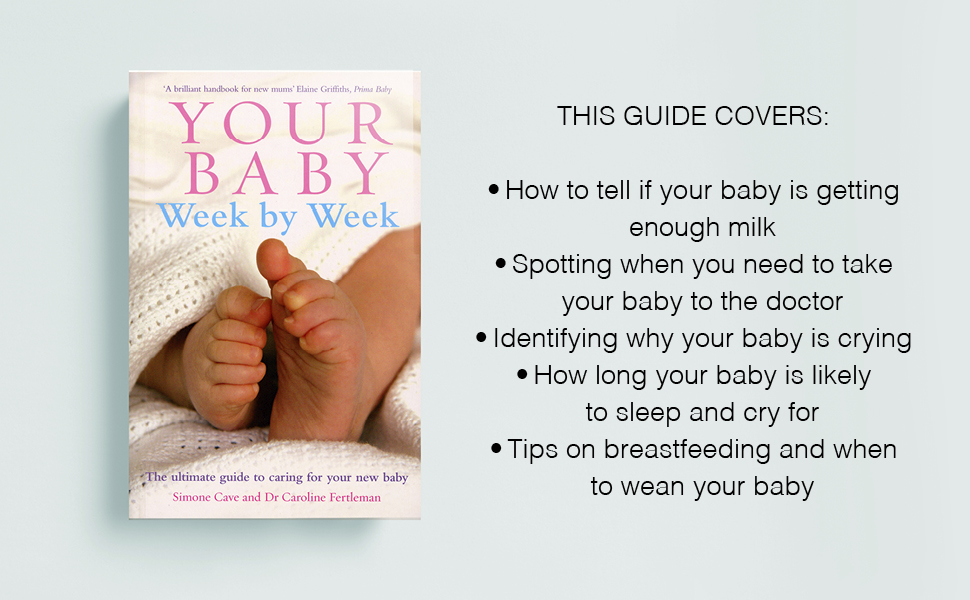
The bestselling week-by-week baby guide from birth until six months, the ultimate baby development book for new parents. 'A lifesaver for every new mum' Grazia ‘The bite-sized approach to topics such as crying, feeding, sleeping and weaning is perfect for helping mums through all the challenges of the early days and inspiring them to feel confident.’ Prima Baby The first six months with a new baby is a special and exciting time full of milestones and new experiences. In Your Baby Week by Week, paediatrician Dr Caroline Fertleman and health writer Simone Cave offer a practical guide to provide reassuring advice so you can be confident about your baby’s needs. Now fully updated , each chapter covers a week of your baby's development, so you are empowered with the knowledge to care for your newborn, including: How to tell if your baby is getting enough milk Spotting when you need to take your baby to the doctor Identifying why your baby is crying How long your baby is likely to sleep and cry for Tips on breastfeeding and when to wean your baby Full of all the information and tips for every parent, Your Baby Week by Week is the only guide you’ll need to starting life with your new baby.


| Dimensions | 15.2 x 2.5 x 23.5 cm |
| Isbn 10 | 0091910552 |
| Isbn 13 | 978-0091910556 |
| Item Weight | 412 g |
| Language | English |
| Print Length | 336 pages |
| Publication Date | 10 May 2007 |
| Publisher | Vermilion |
User
Review of books for first-time parents
I bumped into Gina Ford Contented baby book when I was 6 months pregnant and after that read several other books. Now my baby being 11 weeks, I thought I could share my experience and thoughts of several books I have read, so will copy/paste into the sections for those other books as well.First of all, all babies are really different, so there is no 1 single routine/book that will suit everybody, plus the most important thing it needs to suit the parents. And also parents can make up their own routines to suit their way of life without constantly checking against what suits others. I, obviously, only have experience of my one baby, so surely not all of it will apply to all other babies...Gina Ford "The New Contented Little Baby Book: The Secret to Calm and Confident Parenting"I am generally a very organised person and when I read Gina Ford and even heard negative feedback I was extremely positive and thought of implementing the system from the second week (first two to go with the flow). However, not only very quickly I understood that my baby would not follow any of those schedules but also that I did NOT WANT those schedules any more. I only felt stressed every time I tried to follow some advice to put Ada into a routine and nothing worked, so I eventually (around week 5-6) said to myself that I would completely drop all of that as I am a happier person without them, plus my baby seems to be getting into her own pattern by herself. Daddy fully supported both decisions every time and we both agreed that dropping would be better.By week 8 my little one (LO) started sleeping 6-7 hours straight after her bath, then would wake up for a feed, eat 8-15 minutes and then would get back to sleep for another 4 hours making it a manageable night. Then there are growth spurts, etc but the trend is already clear. She refuses to take a bottle of expressed milk (I am exclusively breastfeeding) and eats too little for a dream feed from a breast so I am not doing it as yet, however I am confident that we will manage to put her to sleep after bath time around 8 pm, then dream feed around 10:30-11 pm and then sleep for the night, we just need to be patient.So sleep can be handled, what is important is* to feed a lot during the day, so that your baby is not hungry at night* have nap times (plus baby brain develops while they are sleeping)* and for my baby having lots of fun in a bath using exercises from Waterbabies DVD makes her actually tired, she is hungry, eats well and falls asleep for the nightSo I am doing the bath time not 5 minutes as per Gina Ford but 15-20 and with exercises, then massaging her already in a calmer environment. Exercises would not suit all parents even though they are proven to be very beneficial for babies' development.One controversial advice from Gina Ford is to avoid eye contact and not to cuddle your baby. Well, until you become a parent it is difficult to explain what it is to have your baby on your hands, to wish her happiness and wanting to do everything to make her feel better, secure and see her smile in her dreams' Sometimes from week 8 (from the book "Your Baby Week By Week " which is excellent and I will cover it below; and it did happen to us as well) babies can make a small quick cry at night and settle themselves, sometimes they would cry but would not want to eat and would just want a cuddle. So I sometimes around 5 am wake up to my baby crying in her cot in a separate room, pick up in my arms, cuddle for 1 minute and she gets back into her peaceful sleep, and I definitely don't miss a chance to kiss her as well' So avoiding eye contact is just ridiculous, if a baby is not sleepy, there is nothing you can do to make her fall asleep, just like for adults, try to calm her down, feed, caress her face/hair, this all is very soothing and she will eventually get tired but will be a happy baby and you will be a happy parent.Another thing is a cot. We never had our baby in our bed and wanted to move her to her own room and cot as soon as we felt confident enough, it happened around week 5. I also bought a Samsung video monitor for that (which has a wonderful function of switching off sound and it turns on only when baby cries or makes sudden noise, this is helpful because babies make little noises during their sleep and when you have her in a Moses basket or even cot next to your bed, you will almost certainly not sleep at all). So again, it depends on the parents, some want to have their babies in the same room for many months, for us Gina's advice to move out was definitely a good one. Plus, Ada learned quickly to sleep in there on her own and settle herself at night.Some thoughts regarding black-outs (putting baby to sleep during the day and at night in a completely black room with no possibility of light to go through). I am sure there will be babies who would not sleep at all with natural or artificial lights on. At the same time I heard a few times that those babies brought up with Gina Ford book struggle to sleep when in unfamiliar environment/at friends' or grandparents where you would not have the same black out conditions. Plus, there is some research that tells that babies need to be exposed to daylight to sleep and develop better. Also, if you start from the beginning, from the first week when babies sleep almost all the time NOT to tip-toe but have them sleep in their Moses basket in the middle of the household activities/TV, then you will have less problems later on as babies get used to sleep with some noise and would not need perfectly calm environment to sleep. Though, we do try to keep it quiet for the time when Ada is falling asleep for the night as sudden sharp noise can wake up anybody'Also, to wake up or not to wake up a baby? There is some research that baby brain develops while sleeping, plus do YOU like to be awaken by somebody or something, like alarm? Still I will sometimes wake her up if I can see that she has been sleeping for 2.5 hours already and it is getting closer to 6 pm. However, I choose to wait another 10 minutes or so and only wake her up when she is in REM (rapid eye movement, like adults, this is shallow sleep and you can be easily awaken, plus this is when you see your dreams) stage of her dream.And ensuring that a baby does not sleep more than 3.5 hours during the day is meaningless, as long as your baby gets enough food during the day, she will sleep at night. Also after some activities, like Waterbabies classes (I also go to their classes once a week) babies are literally exhausted so need to sleep more, so she sleeps more during the day (waking up when she is hungry) and more peacefully at night.Another ridiculous advice is to keep the baby on one breast for 20 minutes, then switch to the second for another 20 minutes. First of all babies make pauses, so sometimes a feed of say 30 minutes can last an hour with some breaks in between. Then, what matters when to switch is not 20 minutes but if you have no more milk left, plus you can try breast compression to increase the flow so baby does not get frustrated/tired of slow flow and this way you ensure to give your baby precious fatter hind milk. But what is more important is that scheduled feeding is the right way if you want to decrease your milk supply and eventually stop. Breasts are never actually emptied and they fill up with milk based on the demands of your LO. So if you put her "on a diet" for an extra hour, then your body will not produce more milk as baby missed a chance to show that she wants more, plus during growth spurts baby can eat as often as every hour, that is not taken into account in the schedules...Again if you formula feed, then there is no problem with breastmilk production.Also there actually a dangerous advice, again with regards to breastfeeding. Breastfeeding should not hurt if latched on properly but the first week WILL HURT, and when your milk comes in on day 3 and your breasts are ready to explode, the last thing you need to do is to start pumping (as Gina Ford suggests). The least you stimulate the breasts, the less painful it will be, the quicker the adjustment of required amount of milk will take place and you will avoid getting mastitis. (My advice is to get Lansinoh gel from the start, this will help against cracked nipples and makes it less painful to feed...You can express manually just a small but right before feeding your baby, that is fine.)For those interested to learn more about breastfeeding and get many questions answered, this link is the best I have seen so far (from Canada). [...]So, I would advise to read it alongside with other books to find out if this is want suits you and your partner, get some basic understanding of possible routine but don't force yourself, your baby will get into a routine without Gina Ford, and it is just nature...Tracy Hogg "The Baby Whisperer..."This book is extremely difficult to read and I even never finished it, read half of it and was struggling throughout. There are lots of repetitions, no structure so if you even want to find a specific section, you would struggle.For my baby girl the routine did not work at all. She learned quickly on her own to settle herself, so I saw no problem with the fact that sometimes she could fall asleep after her feed. Sometimes she does not sleep at all the whole day and even when I take her out in a pram, it takes at least 40 minutes before she can fall asleep; on other times she sleeps almost the whole day waking up just for feeds, which makes me think that she is going through a growth spurt every two weeks' So following advice from Tracy Hogg that after a feed make sure your baby is awake for at least 5 minutes (as otherwise babies will have feeding-sleeping association and would not sleep without being fed) for me is useless.I found useful pages 109-115 to understand the difference between wind, reflux and colic and what to do in each of those situations. Those were the only pages I referred to for help since my baby birth. Fortunately I noted those pages while reading the book as otherwise it is almost impossible to find unless to go through the entire book again.Also there are some things of what the author calls "accidental parenting", those are good to know if you find them in the book. For that reason I never rocked my baby after the bath but it took me several weeks before she learned to fall asleep on her own, however since then it is like magic, I feed, burp and can walk out of the room, she may suck her hand a bit, fuss for a minute and then be in the deep sleep. Again, those tips may work for some people, just would be easier to read if it was more structured...I also found as a useful advice to change a nappy in between the same feed. Babies fall asleep while feeding, so starting to change a nappy helps to wake them up from this booze and to get back to eating.Andrea Grace's Gentle Sleep Solutions: Teach Yourself by Andrea Grace &The Sleep Book for Tired Parents: Help for Solving Children's Sleep Problems by Rebecca Huntley and Kathleen KerrThese books explains the nature of sleep and different ways to help baby fall asleep, pretty basic in my view, I never opened both of them after having read. Plus sleep on its own is never separated from feeding/activities/breathing fresh air that happen during the day.Regarding controlled crying, not sure who would actually want to use this method after having read this article...[...]Your Baby Week By Week: The ultimate guide to caring for your new baby by Dr Caroline Fertleman, Simone CaveThis book is really brilliant and I cannot recommend it highly enough. It is easy to read, structured week by week and has highlights for when to see a doctor, what to expect and what kind of activities you can start doing at around what time to progress the development of your child, and legalities for the UK.I initially started reading it right before the birth of my baby and got to week 7, where the authors say this is as early as you can get to start outing your into a routine. My first reaction (wanting to follow Gina Ford) was it just can't be true, as according to Gina by week 5 you can get everything sorted and baby sleeping long spells at night. However, my experience shows that what authors describe is the closest to the reality (mine at least). My little Ada develops a little bit in advance for some items, but for others is right on the spot. Plus they cover all the basics as well regarding bed time routines, using/not using dummies/putting baby into the cot, etc. I read for several weeks in advance and choose when to start certain things based on my LO, her development and how she feels.And yes, the first several weeks you will be better off by taking your baby with you for the dinner/evening time as they would not fall asleep immediately. I used to sit in the dark for 2-3 hours after the bath waiting for my baby to fall asleep and she would not until actually tired ( I avoided rocking as explained above). Maybe it would have been just easier to follow advice of the authors and enjoy the evening time with my baby for those few weeks.So I started really appreciating this book by week 6 or 7, reread the previous chapters and agreed that it was very close to what I experienced, so since then this is my only book that I keep close by and read several chapters in advance.Good luck and enjoy being a parent, it is unexplainable to those not in the club happiness!!!!
User
Best book I've come across
This is a fantastic book, and I'd highly recommend it to any parents-to-be. It's an excellent survival guide to get you through those fraught first few months, and to help you get your bearings, and to reassure you that things will get easier! I've kept referring to it throughout my baby's first six months, much more so than any other books.It covers the first 24 weeks of a baby's life, and for each week has a section on sleep, crying, feeding, nappies, washing, development and playing, when to see a doctor, and what's happening to mum. I was sceptical of this week by week format, and thought it would be far too rigid, but it's uncannily accurate. It's also the most useful way to approach looking after a newborn, because for example, a one-week old baby's sleep pattern is different to a six-week old's which is different again to a three-month old's etc. It also makes the book really useable. Given that new parents don't have much time to spend reading through books, the week-by-week format means that you can just read a few pages every week to prepare you for what's ahead and what to be thinking about over the next few days. (I read the whole lot through while pregnant so I had an idea of what to expect.)The tone of the book is great, informative yet friendly, lots of good common sense advice, but with a balanced view and not at all preachy.The only thing that's not so good is that it imagines you will start weaning at Week 17. The current advice is to start at Week 26. The book does make this very very clear, and also includes a separate weaning schedule at the back so that you can follow it regardless of when you start, and makes suggestions as to how you might want to adapt it if starting at 26 weeks. However, it means that most of Week 17 onwards is feeding-based so less useful if you are not weaning that early (although to be fair, by that point, your baby doesn't change quite so rapidly in terms if sleeping and crying etc. anyway.) But I didn't find the weaning schedule so useful for a six-month old. Basically, the rest of the book was such a lifesaver, that I really wanted the authors holding my hand when weaning too!
User
Your baby
I bought this book a few weeks before my son (now 5 months old) was born.Since the day we brought him home, my husband and I have come to view this book as our baby bible. Being first-time parents is a tricky business and this book seems to put your mind at ease about most baby-related topics. For example, I was tearfully made to feel by some family members that by cuddling/nursing my baby to sleep in the early days, I was 'spoiling' him. I simply followed the book's advice and ignored them. My son's never been any worse off for it. In fact he is a secure, settled and happy baby and has had no problem falling to sleep on his own in his cot since around week 9 and sleeps through the night (or maybe we're just lucky!!!). I'm sorry, but I'm of the philosophy that you've waited 9 months to hold your baby, why would you want to just bundle them into their cot at every opportunity???Anyway...this book is usefully written in sections week-by-week e.g. feeding, sleeping, washing, crying, development, what's happening to Mum etc so you can just nip to the bits you want to know quickly which is helpful when you've a screaming infant on your hands and not much time to sit down and read. In general, each bit has been a pretty good guide of what we could have expected at each stage. Of course, every child develops in different ways at different times so I don't think this book needs to be taken literally at every stage. There are also sections on signs to look out for should your baby become ill and safety tips to think about as your baby gets older.I noticed some reviewers have complained about this book's section on 'controlled-crying' (when the time's right to let your baby cry without picking them up so they learn to re-settle themselves to sleep). I suppose this book does seem to promote that, but I would argue that a parent's instinct is always correct and the book is intended as a guide only. All babies are individuals and you have to do what is right for your family and what you're comfortable with. It does say to abandon the technique if your baby is ill or teething and simply concentrate on implementing a regular bedtime when they're feeling poorly.I breast-fed my baby until he was 10 weeks old and have now put him onto bottles and began weaning at 17 weeks - I have found the information about all these topics more than adequate for my needs. In my opinion, there is only so much information you can read about these things without it becoming repetitive week by week. I would suggest if you were after more detailed information about breastfeeding, weaning, controlled crying etc, buy yourself a separate book that is focused on each subject or look it up on the net.All in all, this book provided us with reassurance and gave us confidence to deal with each new stage, situation and emotions that come with a new baby and each section is told in a friendly and easy to understand way.I have a newly pregnant friend and have already recommended this book to her.
User
Reassurance for first time mums
Having purchased a significant number of books as a first time mum I found this one to be extremely practical and helpful. There are two main camps of thought: on one side you have the Gina Ford parent led approach and the Dr Sears, attachment parenting, baby led approach on the other. I found the authors to be very practical in their approach and to offer advice and suggestions regarding feeding, sleeping, nappies, warning signs, development and play milestones, when to call the doctor etc.The book is laid out chronologically as you might expect with "week to week" in the title. It allows you to jump forward a few weeks and back again as required.The difficulty with being a first time mum is the combined exhaustion and anxiety resulting from the new found responsibility of looking after a baby. Many of the mums i have spoken with report conflicting advice or no advice from their health visitor/ midwife and this is where the book was helpful for me. The chapters are short and punchy which helps when time is at a premium.I would definitely recommend this book. I gave it four stars and not five as there are many details omitted from the book which I found in a more comprehensive volume such as Dr William and Martha Sears The Baby Book. Whilst acknowledging the WHO guidelines re weaning at 6 months (and providing details on what to do if you decide to wait) they start weaning at Week 17 and yet again I feel confused as to whether to wean my baby now (he is almost 5 months) or to wait. On a plus side they give a prescriptive account of the type of foods to start weaning with and what to look out for in terms if allergy etc.It is definitely worth the money and I'd recommend buying it for those times when your confidence is faltering.Re the reviewer who said it's not for breastfeeding mums, I think that was an unfair criticism as I have exclusively breastfed and th feeding section refers to both. I think the authors refrain from judging mum's who bottle feed and rightly so.
User
My absolute bible - ignore 1* reviews
I saw one reviewer who felt they needed to counter the barrage of one star reviews which surely must be someone who has asked people they know on social media to all slate a book I don't believe they can have fully read... I don't usually write online reviews but I just ordered this for a friend and saw what had happened with the reviews.This book is amazing. It is so user friendly, giving key information each week in a few pages. So it is not overwhelming when you have a new baby to care for. I have just had my third baby and I still refer back to it for reassurance and guidance.It is almost scary how often it says something might happen in a given week and then it does! For example getting mastitis - 2 out of 3 times I developed this the week the book suggested I might. The third time around I have watched out for it and avoided it through massage and hot showers.It also contains lots of very gentle sleep training tips, starting from "just pick up your newborn whenever they cry" to working towards putting them down awake, getting them to drift off on their own and sleep through the night.Sleep training is really hard and this book gets it just right. I can say that because having followed the advice, my first 2 are excellent sleepers and slept through the night from 3/4 months old. My third is only 8 weeks so time will tell...Although I agree that leaving a baby to cry until he or she is sick isn't for most people (and I certainly didn't do it), the book is just covering all the bases. And it is very important to sleep train your baby because learning to go to sleep and self soothe is a life skill we should be teaching our little ones. A little crying is inevitable in this process. And in the long run they won't remember it and will sleep well ready for their days at nursery and school. My eldest 2 are at school and don't ever come to me in the night unless they are ill. They sleep well and study well. There are plenty of parents whose 6/7 year olds still get up in the night.I don't know if the frozen breastmilk point is right or wrong, but if it is wrong I'm fairly sure it is the only factual inaccuracy in a book packed with useful information and guidance.Buy it, read it, follow it - you won't regret it.
User
Absolultey amazing
Having read the original version upon having my first daughter who was born in December 2022 I brought the updated version in preparation for the arrival of my second daughter who was born in May 2025. This book has been amazing to me. It is amazingly accurate, easy to digest and it really helped me. I liken it to a weekly chat with a good friend and I found this book very reassuring. I would highly recommend this book to all parents expecting a baby regardless of weather it is your first, second or third! I am just about to buy another copy for a friend who is expecting their first baby.
User
Invaluable for first time mums!
This book gave me mum-confidence in those early, baffling, sleep exhausted days. Filled with great tips. Cannot recommend highly enough.What a fascinating and helpful book this is. You are not talked down to, there's just good, clear common sense advice given. My husband and I loved spending 10 minutes, on a Sunday night, snuggled up reading what the week ahead had in store. It gives breastfeeding, bottle feeding, sleeping, bathing, possible illness look outs and developmental tips. I cannot recommend this book enough. In fact I purchased another copy for my sister-in-law who is expecting soon. This book really helped me to feel prepared for the changes that come each week with a new born, it gave me confidence.You must be mindful that this book was written before the new guidelines came into force, it therefore gives step by step food advice and how to introduce it at 4 months, and now the guidelines are not to begin feeding til 6 months. It also only advises about puree food, not baby led weaning, but this is a small section in the book and I am sure helpful for those who do chose to puree.
User
worth a read
Really enjoyed the step by step style of what to expect at different ages and found it accurate once the week had passed.
User
مفيد للغايه
فوق الممتاز
User
Best book of post pregnancy
Has a week by week breakdown of all the things a mother needs to know about her baby. Especially helpful when you are having your first baby and have no clue what to expect. I loved that it also covers mother’s recovery side by side and signs to watch out for the baby.
User
Very informative
I am expecting and am half way through this book. It is very informative and definitely prepares me for what's coming. I figure that once the baby arrives, I won't be able to read it as carefully but then I will know exactly where in the book to look for the information I need. Highly recommend it!P.S., this book intends to give you an idea what to expect (just like in "what to expect when you are expecting"), so don't assume your baby's development happens exactly as the book describe week by week. Every baby is different and this book provides a good guideline.
User
My companion throughout the first 6 months
This book was my companion throughout the first 6 months. As a new mom I’ve found that feeling accompanied every step on my baby’s growth is important. And as I read this book week by week it felt comforting knowing what was my baby going through or what could be coming up next helping me feel guided through the process. I wish for every mom and dad to feel the companionship with this book in every step of the way. Thank you 🙏🏽
User
Holy grail and must have book if expecting
Helped us understand the stages from newborn phase especially as first time parents
Trustpilot
3 weeks ago
3 weeks ago