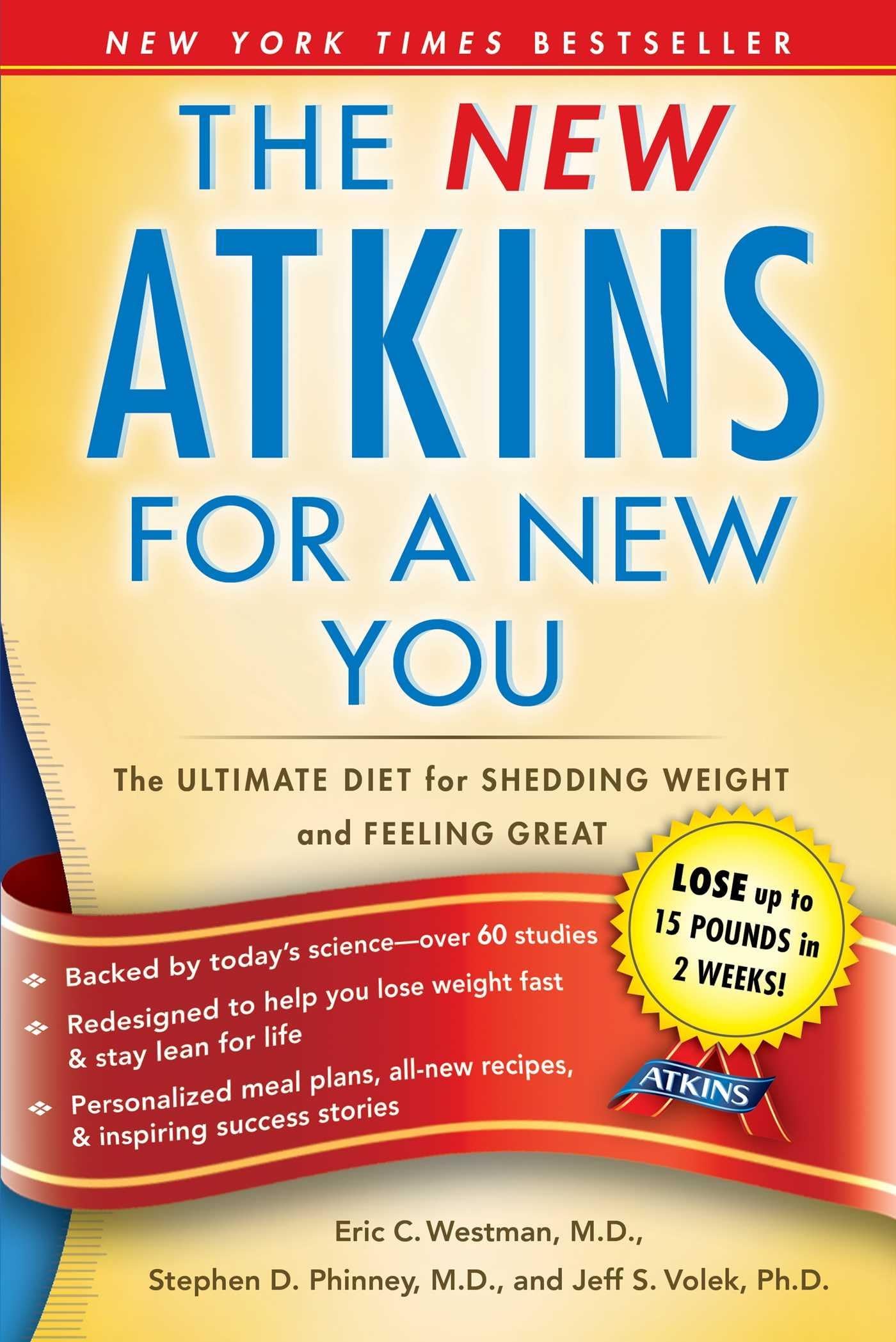

New Atkins for a New You: The Ultimate Diet for Shedding Weight and Feeling Great.
Product ID: 237747
Buy anything from 5,000+ international stores. One checkout price. No surprise fees. Join 2M+ shoppers on Desertcart.
Desertcart purchases this item on your behalf and handles shipping, customs, and support to British Virgin Islands.
Think you know the Atkins Diet? Think Again. The New Atkins is... Powerful: Learn how to eat the wholesome foods that will turn your body into an amazing fat-burning machine. Easy: The updated and simplified program was created with you and your goals in mind. Healthy: Atkins is about eating delicious and healthy food -- a variety of protein, leafy greens and other vegetables, nuts, fruits, and whole grains. Flexible: Perfect for busy lifestyles: you can stick with Atkins at work, at home, on vacation, when you're eating out -- wherever you are. Backed by Science: More than 50 studies support the low-carb science behind Atkins. But Atkins is more than just a diet. This healthy lifestyle focuses on maintenance from Day 1, ensuring that you'll not only take the weight off -- you'll keep it off for good. Featuring inspiring success stories, all-new recipes, and 24 weeks' worth of meal plans, The New Atkins for a New You offers the proven low-carb plan that has worked for millions, now totally updated and even easier than ever. Review: Atkins is the Best - I'm 60, and have a lifetime of digestive woes behind me. I got to a point where I thought virtually NO food out there would agree with me. I was slim until my second child at 36, and carried an excess 20-30 lbs. after that. I was unsuccessful with every diet I tried. In 2003 I tried Atkins for the very first time. It was effortless, the weight dropped off quite easily, and best of all, I felt physically better than I had ever felt in my entire life. My digestive issues disappeared, headaches disappeared, I felt fantastic. How could that be? A few years later I learned I have celiac disease, meaning my time on Atkins without gluten benefitted me enormously. In the years since 2003 I've learned a lot about my body and what works to fuel it. I am highly carb sensitive, and in addition to not being able to eat gluten, I also do not do well with any other grains, starches, and I have to limit even fruit since I just can't handle much sugar. At my current age it is hard to lose weight, but I've been back on a basic Atkins diet since March 1 and have slowly but surely dropped about 15 pounds and a lot of fat in the middle. I feel wonderful, my blood pressure is down, and I expect my cholesterol to also go down. I am frankly tired of reading all the other competing nutritionists and diet gurus dissing Atkins and I'm fed up with people who don't understand the diet making erroneous assumptions about it and how it works. If I ate the way these people prescribe, I'd be sick and I'd feel horrible all the time. If Atkins is so bad, I'd like these naysayers to explain why I feel so wonderful eating that way! The proof is in the pudding, as they say. While Atkins may not work for everyone, it sure works for me on every single level. I'm committed to eating along the lines of Atkins as a way of life, not as a quick fix diet. Atkins is allowing my body to stabilize and return to its natural state, and Atkins has completely solved all my lifetime digestive issues. I've enjoyed all the Atkins books over the years. My favorite is the friendly, chatty, very personal and anecdotal 1972 version, but they are all a bit different and offer different bits of information along the way. I found this new version to be quite good and it incorporates much of the newest information to back up the claims. It's valuable to understand the principles behind how this type of diet works and why it works so well, and this edition is informative and very readable. If you have had a very carb heavy diet prior to going into Atkins, there is a period of adjustment where your body reacts to the withdrawal of carbs and switches over to a fat burning type of metabolism. If you know this going into it, be ready to put up with possible headaches and feeling tired for a few days, but your reward will soon come. After the first week, I have never again experienced any fatigue. I have plenty of energy for sports (I ski 50+ times each winter, I mountain bike, I do strenuous weight and cardio workouts 4-5 times a week, and so on). The only time I feel bad is if I eat something not recommended by Atkins. I have learned how my body reacts to such foods, and I don't like it. I much prefer how I feel on Atkins to how I feel eating a different way. My advice to anyone is this: Buy the book, read it front to back, and give it an honest trial for 2 weeks. The proof will be in how you feel. The weight loss you'll observe is a bonus. UPDATE 7/19/11. I'm still following Atkins, and at this point I have lost about 25 pounds from my start in 3/10. I have lost 11% fat, going from 40% to 29%. Physically I look entirely different. I look slim and SMALL, and it still amazes me to see this in a mirror. I'm still a few pounds and maybe 5% fat loss from my goal, and need to lose around 10 more pounds. But the important thing is that over the last 16 months I have completely altered my relationship to food, and have adjusted to eating this way for life. This is absolutely key to success: you cannot go back to old eating habits. But for me, I had to realize I could not lose weight as fast as I wanted, and I could not allow myself to be discouraged by that. My loss has been in fits and starts: If I was pretty strict with the diet, I'd lose. When I loosened up a bit I'd maintain, but that was useful because this incremental rate of loss allowed me to establish increasingly lower "set points" for weight. I have had lifelong issues with high blood pressure and high-ish cholesterol. My BP is quite normal now, and while my BP is still around 250 or so, a closer analysis reveals that my HDL is extremely high (part of the reason my total has not gone down), and my LDL particles are off the chart fluffy in nature, which is also good. So I'm no longer worried about either of these measurements. I take no meds, have zero digestive issues any more, zero heartburn, I have tons of energy to ski, bike, exercise. Running on a relatively carb-less metabolism suits me perfectly and I'll never go back. NEW BOOK REC: Two of the authors of this book have just published a new one: The Art and Science of Low Carbohydrate Living: An Expert Guide to Making the Life Saving Benefits of Carbohydrate Restriction Sustainable and Enjoyable. I REALLY liked this book, just finished reading it. It is strongly aimed at convincing the doctors of the validity of low carbohydrate eating, and is sometimes a bit technical in nature. But if you are interested in the nuts and bolts of why this works, this book is a nice addition to the Gary Taubes books and will further increase your resolve and comfort in eating this way. [...] Review: A nutrient-dense, whole foods diet for sustained weight loss - Everyone who's dieted knows that when you're committed, losing weight isn't a problem. Self-determination can override hunger and cravings--for a time. The real problem is keeping the weight off. You can't hope for sustained weight loss if you return to the same foods that made you fat. Whether you're an omnivore, vegetarian or vegan, the New Atkins offers a diet that is tasty, satiating, nutritious, and full of variety. It includes four phases: Phase 1. Induction. You start by reducing carbohydrate intake to 20 grams (foundation vegetables) and increasing protein and fat. Your body will switch from burning sugar for energy to burning fat, including your own stored fat. Phase 2. Ongoing Weight Loss. You increase your carbohydrate consumption by reintroducing specific foods (such as nuts or berries) in 5-gram increments. If weight loss stops or specific foods lead to cravings, then you adjust again by trying another new food or backing off on carbs. The goal is to identify trigger foods and increase carbs while still losing weight. Phase 3. Pre-Maintenance. This is where you experiment with increasing your carb intake by 10-gram increments while maintaining your desired weight. Phase 4. Lifetime Maintenance. Now you know how many carbs you can eat to maintain your desired weight for life. The New Atkins includes information on knowing yourself; understanding carbohydrates, protein, and fat; foods to choose in ethnic restaurants and fast food establishments; and the role of water, supplements and exercise. It includes a chapter of recipes for low-carb sauces, compound butters and oils, salad dressings, marinades, rubs and broths. Another chapter includes week-long meal plans for phases 1 through 3 at various carb levels. You'll be inspired by stories of those who succeeded on the diet and coached on how to make it work for you. The book concludes with chapters on metabolic syndrome, cardiovascular health and diabetes. And if you're like me, you may find aches and pains vanishing over time as you avoid the gluten-containing grains wheat, rye, and barley. When I went on a low-carb diet, I had no idea that I was gluten-intolerant. I mistook decades-long back pain and stiffness for aging and a bad bed, and I learned to live with the pain. That pain is now gone. The one thing that would make this diet not only delicious and doable but very healthy would be to eat only pasture-raised meats. These come from animals raised humanely and fed their natural dietary without the stress and drugging needed in confined animal feeding operations (CAFOs). These animals taste better, have more essential omega-3 fatty acids, and are healthier for you and the environment. Please see the comments for suggestions on how to find these healthful foods.
| Best Sellers Rank | #28,731 in Books ( See Top 100 in Books ) #2 in Atkins Diet (Books) #116 in Weight Loss Diets (Books) #190 in Other Diet Books |
| Customer Reviews | 4.4 out of 5 stars 4,622 Reviews |
C**M
Atkins is the Best
I'm 60, and have a lifetime of digestive woes behind me. I got to a point where I thought virtually NO food out there would agree with me. I was slim until my second child at 36, and carried an excess 20-30 lbs. after that. I was unsuccessful with every diet I tried. In 2003 I tried Atkins for the very first time. It was effortless, the weight dropped off quite easily, and best of all, I felt physically better than I had ever felt in my entire life. My digestive issues disappeared, headaches disappeared, I felt fantastic. How could that be? A few years later I learned I have celiac disease, meaning my time on Atkins without gluten benefitted me enormously. In the years since 2003 I've learned a lot about my body and what works to fuel it. I am highly carb sensitive, and in addition to not being able to eat gluten, I also do not do well with any other grains, starches, and I have to limit even fruit since I just can't handle much sugar. At my current age it is hard to lose weight, but I've been back on a basic Atkins diet since March 1 and have slowly but surely dropped about 15 pounds and a lot of fat in the middle. I feel wonderful, my blood pressure is down, and I expect my cholesterol to also go down. I am frankly tired of reading all the other competing nutritionists and diet gurus dissing Atkins and I'm fed up with people who don't understand the diet making erroneous assumptions about it and how it works. If I ate the way these people prescribe, I'd be sick and I'd feel horrible all the time. If Atkins is so bad, I'd like these naysayers to explain why I feel so wonderful eating that way! The proof is in the pudding, as they say. While Atkins may not work for everyone, it sure works for me on every single level. I'm committed to eating along the lines of Atkins as a way of life, not as a quick fix diet. Atkins is allowing my body to stabilize and return to its natural state, and Atkins has completely solved all my lifetime digestive issues. I've enjoyed all the Atkins books over the years. My favorite is the friendly, chatty, very personal and anecdotal 1972 version, but they are all a bit different and offer different bits of information along the way. I found this new version to be quite good and it incorporates much of the newest information to back up the claims. It's valuable to understand the principles behind how this type of diet works and why it works so well, and this edition is informative and very readable. If you have had a very carb heavy diet prior to going into Atkins, there is a period of adjustment where your body reacts to the withdrawal of carbs and switches over to a fat burning type of metabolism. If you know this going into it, be ready to put up with possible headaches and feeling tired for a few days, but your reward will soon come. After the first week, I have never again experienced any fatigue. I have plenty of energy for sports (I ski 50+ times each winter, I mountain bike, I do strenuous weight and cardio workouts 4-5 times a week, and so on). The only time I feel bad is if I eat something not recommended by Atkins. I have learned how my body reacts to such foods, and I don't like it. I much prefer how I feel on Atkins to how I feel eating a different way. My advice to anyone is this: Buy the book, read it front to back, and give it an honest trial for 2 weeks. The proof will be in how you feel. The weight loss you'll observe is a bonus. UPDATE 7/19/11. I'm still following Atkins, and at this point I have lost about 25 pounds from my start in 3/10. I have lost 11% fat, going from 40% to 29%. Physically I look entirely different. I look slim and SMALL, and it still amazes me to see this in a mirror. I'm still a few pounds and maybe 5% fat loss from my goal, and need to lose around 10 more pounds. But the important thing is that over the last 16 months I have completely altered my relationship to food, and have adjusted to eating this way for life. This is absolutely key to success: you cannot go back to old eating habits. But for me, I had to realize I could not lose weight as fast as I wanted, and I could not allow myself to be discouraged by that. My loss has been in fits and starts: If I was pretty strict with the diet, I'd lose. When I loosened up a bit I'd maintain, but that was useful because this incremental rate of loss allowed me to establish increasingly lower "set points" for weight. I have had lifelong issues with high blood pressure and high-ish cholesterol. My BP is quite normal now, and while my BP is still around 250 or so, a closer analysis reveals that my HDL is extremely high (part of the reason my total has not gone down), and my LDL particles are off the chart fluffy in nature, which is also good. So I'm no longer worried about either of these measurements. I take no meds, have zero digestive issues any more, zero heartburn, I have tons of energy to ski, bike, exercise. Running on a relatively carb-less metabolism suits me perfectly and I'll never go back. NEW BOOK REC: Two of the authors of this book have just published a new one: The Art and Science of Low Carbohydrate Living: An Expert Guide to Making the Life Saving Benefits of Carbohydrate Restriction Sustainable and Enjoyable. I REALLY liked this book, just finished reading it. It is strongly aimed at convincing the doctors of the validity of low carbohydrate eating, and is sometimes a bit technical in nature. But if you are interested in the nuts and bolts of why this works, this book is a nice addition to the Gary Taubes books and will further increase your resolve and comfort in eating this way. [...]
M**G
A nutrient-dense, whole foods diet for sustained weight loss
Everyone who's dieted knows that when you're committed, losing weight isn't a problem. Self-determination can override hunger and cravings--for a time. The real problem is keeping the weight off. You can't hope for sustained weight loss if you return to the same foods that made you fat. Whether you're an omnivore, vegetarian or vegan, the New Atkins offers a diet that is tasty, satiating, nutritious, and full of variety. It includes four phases: Phase 1. Induction. You start by reducing carbohydrate intake to 20 grams (foundation vegetables) and increasing protein and fat. Your body will switch from burning sugar for energy to burning fat, including your own stored fat. Phase 2. Ongoing Weight Loss. You increase your carbohydrate consumption by reintroducing specific foods (such as nuts or berries) in 5-gram increments. If weight loss stops or specific foods lead to cravings, then you adjust again by trying another new food or backing off on carbs. The goal is to identify trigger foods and increase carbs while still losing weight. Phase 3. Pre-Maintenance. This is where you experiment with increasing your carb intake by 10-gram increments while maintaining your desired weight. Phase 4. Lifetime Maintenance. Now you know how many carbs you can eat to maintain your desired weight for life. The New Atkins includes information on knowing yourself; understanding carbohydrates, protein, and fat; foods to choose in ethnic restaurants and fast food establishments; and the role of water, supplements and exercise. It includes a chapter of recipes for low-carb sauces, compound butters and oils, salad dressings, marinades, rubs and broths. Another chapter includes week-long meal plans for phases 1 through 3 at various carb levels. You'll be inspired by stories of those who succeeded on the diet and coached on how to make it work for you. The book concludes with chapters on metabolic syndrome, cardiovascular health and diabetes. And if you're like me, you may find aches and pains vanishing over time as you avoid the gluten-containing grains wheat, rye, and barley. When I went on a low-carb diet, I had no idea that I was gluten-intolerant. I mistook decades-long back pain and stiffness for aging and a bad bed, and I learned to live with the pain. That pain is now gone. The one thing that would make this diet not only delicious and doable but very healthy would be to eat only pasture-raised meats. These come from animals raised humanely and fed their natural dietary without the stress and drugging needed in confined animal feeding operations (CAFOs). These animals taste better, have more essential omega-3 fatty acids, and are healthier for you and the environment. Please see the comments for suggestions on how to find these healthful foods.
W**.
Great resource for someone wanting a low-carb diet plan
This book updates Robert Atkins' original book with updated science. That I appreciate. While there is no doubt that this is an endorsement for this particular food plan, rather than objective scientific research, the science they present is pretty solid. As a researcher (in a different field) myself, I chased down some of their references, and every one I checked was fairly represented in the book. Speaking personally, I am in good physical condition and my BMI (body mass index) is within acceptable limits. Even so, I wanted to lose a little excess fat. Following this plan, I have dropped 15 pounds and 2" off my waist, and I have not felt hungry or deprived at all. I'm sold on learning more to make this a lifestyle. The only reason I did not rate this 5 stars is just that point - it is very good for those who are in the early to middle stages of weight loss, but less informative for those of us who are looking for ongoing maintenance. Still, it's a good book, in my opinion. Very readable and very informative.
J**C
The latest and best science
I have hesitated to write a review because I am one of the success stories in this book. However, in light of T. Colin Campbell's unprofessional attack on this book, I believe I must speak up to share my story and the good health that has resulted in my following the Atkins plan. I am nearly 65 years old and have struggled with weight all my life. I've been on many diets including a vegetarian one with little results in either weight loss or improved health. In fact, my health markers were getting worse, and I suffered from arthritis, dry skin and elevated tryglyceride levels. My blood pressure was borderline. Since following the plan outlined in this book, I have lost weight, my arthritis has improved substantially (particularly in my neck and shoulders) and my dry skin (which 2 dermatologists had diagnosed as rosacea) has disappeared. My tryglyceride level dropped remarkably, but more importantly my HDL (the good cholesterol) has gone up and my latest BP was 117/76. I used to wear a size 18 -- now I wear a 6 or 8. All of these results came from following the plan outlined in this book. What disturbs me further about T. Colin Campbell is that he has clearly put out a call to his vegan followers to come to the Amazon site and give bad reviews of this book, as he posted this nonsense on his webpage. I don't have a problem with their chosen lifestyle, but I do have a problem with the many deragatory posts that make it clear that they could not have read this book as they have no comprehension of its contents. Shame on them. Using the Amazon review system to grind their vegan axes should not be allowed. Contrary to their ravings, the Atkins diet recommends lots of vegetables, a conservative amount of dietary protein and good fats. All recommendations that are supported by recent science. Read Gary Taubes "Good Calories, Bad Calories" or the distinquished works of Dr. Mary Enig. T. Colin Campbell has used this review process to further his own agenda and has encouraged his minions to post here. They disparage the book as well as mouth urban legend lies about Dr. Robert Atkins (a cardiologist, BTW). Anyway, read the book and make your own conclusions. Don't be led astray by these agenda-led and untrue attacks. This 65 year old feels 20-30 years younger!!
A**R
good book, but not much help for middle-aged women
I've read several books on the low-carb high-fat (LCHF) diet, and decided to read the Atkins slant on it. For me the book is quite comprehensive, and gives a structure to adjusting to this diet. My comment is about the diet as well as the book. For post-menopausal women, it is very difficult to lose weight, especially the stuff that collects around the middle. From reading Gary Taubes' "Why We Get Fat", estrogen plays a part in this. Lower estrogen levels apparently hinder the weight loss process. Therefore, we probably need to consider counting calories, and/or keeping fat levels under a certain level (since fat is high in calories). I also believe that exercise doesn't figure into weight loss for middle-aged women unless you're doing high intensity exercise on a regular basis. Exercise is key to good health, don't get me wrong, but we need to really step it up if we expect exercise to help with weight loss. (sustain 80-90% VO2max for example). I didn't lose any weight until I kept carbs down to 20/day and dropped calories to just above BMR; my exercise routine is the same as usual, gym plus endurance cycling. Also, for post-menopausal women, I don't imagine that adding back high-carb foods will be possible. The book makes you think you can add whole grains, legumes, etc. That may be fine for men or younger people, but I don't see it for us. For good health, good eating, and preventing weight gain, I think the low-carb approach is the best one out there. It has some daunting disadvantages, though. Once I get my carbs down very low, if I suddenly eat food high in carbs, I get dizzy and feel terrible. There are apparently no good methods to measure a ketonic state (the strips are inaccurate, the blood test gadget is problematic.) It's best to keep your sodium level up, and drink a lot of water. I've worked this out by now, but it was daunting at first. Fortunately I like salty foods. Also, you need to be able to cook: take-out is not much of an option. I have yet to find a sweetener that isn't awful, including Stevia, which has a nasty aftertaste. Positives: being able to eat full-fat foods! Cooking with butter and various meat drippings, bacon fat, it all adds flavor. Whole milk yogurt is fantastic! Your energy level will be consistent all day. There are better thickening agents than the "thick n thin" product, which sounds dreadful: a little coconut flour, or even almond butter. Fat is good for your brain, and this diet may prevent all of the bizarre autoimmune diseases as well as health issues for children. I've read that athletes don't perform as well, but I have no problem with my cycling, getting into 90% VO2max on hill climbs. I can recommend this cookbook, Against All Grain: Delectable Paleo Recipes to Eat Well & Feel Great by Danielle Walker. For athletes, this is an interesting read, "The Art and Science of Low Carbohydrate Performance" by Stephen Phinney. Regarding the topic of scientific studies: In my reading it seems that any group of studies can be used to make a point. Get online and look at the claims that the low fat diet prevents heart disease: the same studies are given, sometimes even the same studies that LCHF authors use to prove the opposite.
D**C
NEW Atkins is really new!
This book is so useful! It reignited my resolve to follow a restricted carb diet. It is truly a shame that Dr. Atkins is so maligned; these authors (all doctors) have seen the good of Atkins' program and explained how to follow a low carb diet safely and effectively. I am in my third week using the book and did have lab tests done. My doctor showed me that my triglycerides went from over 260 to a happy 104. My overall cholesterol is dropping, and my HDL increased. In addition, my doctor gave me permission to stop taking oral meds for Type II diabetes. My blood glucose has been consistently in the low 80's--like a "normal" person. I have followed low carb diets since 1972, but unfortunately, I get hooked on carbs and let them "sneak back into" my daily food choices. This book shows how you can work a low carb life style at a pace that suits you. The book also clearly explains how to find a tolerance level for YOUR daily carbohydrate level in a very systematic way. I had never really looked at how many carbs, exactly, I can eat in a day without gaining weight, spiking my blood glucose numbers, or setting off wild cravings. I strongly recommend buying Drs. Westman, Phinney and Volek's other book, The Art and Science of Low Carbohydrate Living. Their "Art and Science" book is very useful if you are interested in the science behind the benefits. I read it before I implemented the New Atkins, New You diet. I also purchased an Atkins Journal. This has allowed me to see daily what I am doing with my food and given me a very useful, uncomplicated tool. There is even a section in the "New Atkins" book on how to follow a restricted carb diet if you are a vegetarian. So, no excuses! My cravings have abated, I'm not hungry all of the time, nor am I experiencing cyclic energy crashes, all of which I have experienced on low-fat or calorie restricted diets. And, oh, yes, I have lost weight and can get into my smaller clothes.
S**R
Blood sugar normal on day 1, so far so good
I bought this book after hearing Dr. Westman speak. Dr. Westman is a Duke physician and he really had a lot of things to say that were very interesting and made me think about this type of a diet. Recently, I have been having trouble with blood sugar, and have had to start taking medication. I have started checking my blood sugar to try to get it under control. I have been on this diet for 5 days and I have had 100% normal blood sugar for 5 days. I don't really like meat very much. Also, all of the vegetables that I really usually like are not the vegetables that we are supposed to be eating on this diet. In fact the idea of eating a lot of vegetables like cauliflower and broccoli just sounded bad, so I wasn't looking forward to eating like this. I do like cheese and dairy products, so it is nice to be able to feel like I can eat cheese. I have found that there are a lot of options for substitutes and alternatives for different types of carbohydrates. I also recommend the George Stella Quick and Easy low carb cookbook, because the recipes are really good with normal ingredients. After researching different types of foods that I can substitute and finding recipes that I felt like I would enjoy, I went ahead and decided to go ahead and start this diet. It was really really weird for me the first time I went grocery shopping and bought all of these things that I have never wanted to purchase. Or purchased things i would never consider in the context of weight loss. However I am also happy to report, that I have lost a little bit of weight. And i have not been hungry and I have really liked what I have been eating. Of course I'm 5 days in so I can't really comment on the sustainability of this diet or the weight loss aspect. I will consider re-doing my review after 90 days or so and seeing if I have been able to sustain it and if I have lost weight. It is extremely encouraging to have enjoyed the recipes from the cookbook that I purchased in addition to this book. And to not be hungry. It is also extremely encouraging to have my blood sugar be normal. It has been really motivating to see that there is an immediate and obvious difference in my blood sugar from day 1. So that is why I'm starting out with a 5-star review. I felt Dr. Westman was 100% credible and he made me feel like I could do this. And so far, I can.
J**9
Excellent (and Essential) for Vegetarians & Vegans
I don't eat meat or eggs. You could say I'm 99% vegan except for wild Alaskan salmon (not farmed fish) once or twice a week. My reasons are ethical, I don't need meat at the expense of death or suffering to another creature. My exception for wild salmon?.... 1) They're harvested close to the end of their life cycle, and 2) The healthiest people on the planet (think Okinawan or Mediterranean) eat small amounts of animal products, mainly in the form of fish. So how does a 99% vegetarian even consider Atkins? Because I know it works... when I was a teenager in high school, my step mother was on the old Atkins. She lost alot of weight (100#). As a teen (a meat-eater back then), I tried it for about 2 weeks and lost 10 pounds effortlessly. As I've gotten older, my weight started creeping up despite watching what I ate (no goodies), only whole grain carbs, and diligent daily exercise. Evidently, we become more carb resistant as we age. I heard about The New Atkins, read reviews from some of the vegetarians that had posted, and decided to purchase it. What an excellent program, much improved from the old Atkins! When you mention Atkins to alot of people, they think bacon, sausages, no vegetables, etc. I've had to set more than a few people straight that The New Atkins is not like that! Refined carbs are the enemy. The book brings out that we're all different, some of us are more "carb resistant" than others, just as some of us may be lactose intolerant. My husband, for example, has carby, sugary goodness every night before bed and never gains an ounce! The New Atkins starts with an "Induction Phase" where you limit carbs to 20-25 gms per day. Basically almost all your carbs come from vegetables (Can you get any healthier than that!?) Doing the New Atkins as a vegan will take more time and planning, but is completely do-able. Tofu is big, as well as some of the vegan burgers and soy products. After a period of time (this depends on the amount of weight you need to lose, your goals, etc) you will start adding more carbs each week until you determine your body's own "set point". We're all different, so the amount of carbs needed by each of us varies. I am VERY happy with this book and think everyone should read it! The research and science regarding a low carb diet is impressive. And what a big plus that the book provides menus for meat eaters as well as vegans/vegetarians! This makes it much easier to follow the program! One last thing: Did I mention I lost my 5-10# that had been creeping up??? This book has made me much more mindful of the quality and quantity of carbs I eat! Whether you're a vegan or carnivore, if you want to lose weight or improve your diet, The New Atkins is for you!
A**N
Great ideas
Can’t go wrong with this book. It explains what you need to know about Atkins diet.
M**N
Very good
Now all I have to do is to read it. You know what I mean.
M**R
Ernährung und Gesundheit leicht erklärt
Super Buch. Absolut empfehlenswert! Verständlich, praktikabel und hoch informativ. Jeder, der seine Gesundheit in die eigene Hand nehmen will, ist mit diesem Buch gut beraten.
M**A
Poniendo al día el método Atkins
Es básicamente una revisión de la dieta Atkins, más clara y comprensible que la obra original. Casi al mismo tiempo se ha publicado otro libro sobre la "nueva Atkins" The New Atkins Made Easy una versión simplificada que viene contando lo mismo, pero en 100 páginas menos. Sin embargo me quedo con este, porque profundiza más sobre la importancia de elegir grasas de calidad y en que la cantidad de grasa ingerida ha de ser proporcional a las necesidades individuales de cada persona. Las recomendaciones sobre la grasa alimentaria de esta revisión de la dieta Atkins coinciden con las de la dieta Primal, las nuevas formulaciones de la dieta Paleo, la Mediterránea Cetogénica, etc. Os dejo un extracto tomado esencialmente del capítulo 5 (aviso: la traducción es fiel a la idea, pero no es una traducción literal) << Ya va siendo hora de dejar de pensar que las grasas alimentarias son el enemigo: la grasa es una fuente esencial de energía y nutrientes esenciales, y no podemos vivir sin ella. "COMER GRASA HACE QUE QUEMEMOS GRASA" Hay un mito (sobre la dieta Atkins) acerca de que comer alimentos ricos en grasa es lo que hace que arranque el mecanismo de quema de grasa corporal. No es así: lo que funciona como estímulo para que el mecanismo de quema de grasa se ponga en marcha es la limitación de los carbohidratos. No somos lo que comemos, somos lo que nuestro cuerpo decide almacenar de aquello que comemos: las grasas que tomamos en la comida se mezclarán con la grasa ya disponible en nuestro cuerpo (la grasa almacenada) y el cuerpo quemará una mezcla de ambas. Cuando tu cuerpo está ya adaptado a hacer un metabolismo basado en las grasas, alguno de los ingredientes de esa mezcla se quema con más rapidez (los ácidos omega 3, como veremos un poco más adelante) y el resto sigue circulando y necesita volver a ser re-mezclado con regularidad para poder quemarse de forma apropiada. Tu trabajo consiste en aportar al cuerpo el tipo correcto de grasa para que pueda hacer su trabajo correctamente. TRES TIPOS DE GRASA Aunque la mayoría de los alimentos contienen una mezcla de distintos tipos de grasa, habitualmente se clasifican según el tipo de grasa que predomina: - Ácidos grasos monoinsaturados, se encuentran en el aceite de oliva, los aguacates, el aceite de colza. - Ácidos grasos poliinsaturados, son ricos en ácidos poliinsaturados los pescados azules (sardinas, salmón, arenques, anchoas). También lo son los aceites vegetales, de semillas y nueces, como el aceite de girasol, el aceite de linaza, el aceite de soja y el de maíz - Ácidos grasos saturados, como la mantequilla, la manteca de cerdo, el aceite de palma y el aceite de coco. Todas estas grasas pueden ser saludables, pero es necesario encontrar un equilibrio en la dieta entre los tres tipos, para que el cuerpo tenga el aporte adecuado de cada una. Es recomendable limitar los ácidos poliinsaturados que provienen de semillas, maíz, soja, etc porque cuando se consumen en grandes cantidades hacen que suba tanto el colesterol "bueno" como el "malo", por lo que nuestro aporte de ácidos grasos poliinsaturados provendrá preferentemente del pescado azul. Usa aceite de oliva para aliñar ensaladas y verduras. Cocina con aceite de oliva, mantequilla, aceite de coco, teniendo la precaución de no calentarlos más allá del momento en que empiezan a humear, porque quemar estos aceites produce cambios químicos que pueden convertir estas grasas buenas en grasas malas. LOS ÁCIDOS GRASOS ESENCIALES Dentro de los ácidos grasos poliinsaturados distinguimos dos tipos de ácidos grasos esenciales, omega 3 y omega 6. - Las semillas y los cereales son ricos en omega 6, y también lo es la carne de animales alimentados con piensos y grano (pollo, cerdo, ternera, etc) - El pasto y las algas son ricas en omega 3, y también lo son los animales que se alimentan exclusivamente de pasto o de algas, como el pescado azul, los mariscos y los animales criados de forma "orgánica" (unicamente alimentados con pasto, no con grano) Tanto el omega 3 como el omega 6 son fundamentales para el correcto funcionamiento de nuestros órganos, pero es necesario que estén equilibrados. En la actualidad nuestra dieta occidental está dominada por los ácidos omega 6, mientras que apenas se toma la cantidad necesaria de omega 3. El equilibrio ideal sería tomar la misma cantidad de ambos (una proporción 1 a 1), pero es mucho más realista intentar conseguir una proporción de 2 a 1, o 3 a 1. Para conseguir esta proporción se recomienda: - Aumentar el consumo de alimentos ricos en omega 3 (como pescado graso) e incluso tomar un suplemento de omega 3 que provenga de aceite de pescado criado en aguas frías, como el aceite de hígado de bacalao o el aceite de salmón - Añadir una cantidad razonable de nueces y frutos secos a nuestra dieta (las nueces son especialmente altas en omega 3) - Evitar los aceites vegetales, ricos en omega 6: aceite de girasol, de maíz, de soja - De la misma forma es aconsejable evitar la grasa de los animales criados con grano y piensos (rica en omega 6), eligiendo los cortes más magros y complementándolos con grasas ricas en omega 3 (o eligiendo carne de animales criados de forma orgánica, únicamente con pasto) EL OMEGA 3 SE QUEMA ANTES Y EN MAYOR CANTIDAD Cuando el cuerpo quema grasa para conseguir energía, los ácidos omega 3 se queman más rápidamente que los omega 3, las grasas saturadas y las monoinsaturadas. También se quema con mayor rapidez que las grasas que tenemos almacenadas, por una persona que está perdiendo peso gracias a una dieta cetogénica consume más omega 3. Por eso es esencial que aseguremos la cantidad correcta de omega 3 tanto durante la pérdida de peso como durante un cierto tiempo después de haber alcanzado nuestro peso objetivo. ¿TODO ESTO SUENA CONFUSO? Lo entenderás mejor si piensas en el cuerpo como en un motor: los motores necesitan grasa en forma de combustible, para obtener energía, pero también aceite para lubricar el motor y que todas las piezas funcionen de forma eficaz y obtengan el mejor rendimiento del combustible. Para nuestro cuerpo, el aceite que permite que las piezas funcionen correctamente y que quememos la grasa de forma óptima son los ácidos grasos esenciales omega 6 y omega 3. Piensa en ellos como los lubricantes del metabolismo. TENEMOS QUE TOMAR EL TIPO ADECUADO DE GRASA, Y TAMBIÉN LA CANTIDAD ADECUADA Como hemos visto, es necesario garantizar el tipo adecuado de grasa que proviene de los alimentos para que el mecanismo de quema de grasa acumulada funcione de forma óptima. Pero no es menos cierto que también es necesario tomar la cantidad adecuada: hemos de tomar la cantidad suficiente como para conseguir una agradable sensación de saciedad, recibir las vitaminas liposolubles y que el metabolismo lipídico pueda funcionar de forma eficiente. Pero eso no significa que debamos tomar tanta grasa como para que se convierta en una bomba de calorías. Evidentemente, una mujer menuda y de hábitos sedentarios necesitará tomar mucha menos cantidad de grasa que una muy activa o que un hombre alto y corpulento. Este es un ejemplo de la cantidad de grasa que tomaremos a diario: - 2 cucharadas soperas de aceite de oliva, para cocinar y aliñar - 1 cucharada de mantequilla - unos 30 gramos de nata - 55 gramos de queso curado - 2 o 3 huevos - 2 o 3 raciones de carne, pescado, pollo, marisco (una ración son entre 120 y 180 gramos, pesados después de cocinar) - 10 aceitunas - 1/2 aguacate - 55 gramos de nueces o frutos secos (en la dieta Atkins sólo a partir de la tercera semana de la fase Inducción) ¿QUÉ OCURRE CON LAS GRASAS TRANS? Las grasas trans son grasas vegetales hidrogenadas o parcialmente hidrogenadas, presentes en las margarinas y en la mayoría de productos precocinados. Aunque en los últimos años la industria alimentaria ha retirado las grasas trans de muchos alimentos, la legislación permite seguir añadiendo una pequeña cantidad de grasas hidrogenadas, siempre que no aporten mas de 0.5 gramos de grasa por cada ración. Las grasas trans aumentan el nivel de inflamación del cuerpo, los niveles de colesterol "malo" y están asociadas con un mayor riesgo de enfermedades cardiovasculares e infartos. Para asegurarte de que no estás consumiendo alimentos con grasas trans lee con atención la LISTA de ingredientes en la etiqueta de cada alimento procesado: si incluyen "grasas vegetales hidrogenadas o parcialmente hidrogenadas" devuélvelos al estante. >>
A**G
Really effective and empowering
Excellent - really clear analysis of the issue, and then step-by-step guidance on how to put it into practice. Not only have I lost a stone and a half painlessly and quickly, but my diabetes 2 blood sugar readings plummetted so rapidly, it took my doctor's breath away. He could hardly believe his eyes. It has also helped lower aspects of my cholesterol dramatically. My husband was so impressed, he began to follow it too, and has also lost weight very quickly and improved his cholesterol results strikingly. I am really grateful to the friend who gave me this book for my birthday - it has changed my life. Not only is my health so much better but I feel empowered, because I have achieved these results without resorting to pills. I have been recommending it to other friends or buying copies for them for their birthdays.
Trustpilot
2 months ago
4 days ago