We remain fully operational. Our teams are working around the clock to ensure your deliveries continue safely.

Descargar la aplicación


Servicios al cliente
Sobre nosotros
Copyright © 2025 Desertcart Holdings Limited
Descargar la aplicación
Buy anything from 5,000+ international stores. One checkout price. No surprise fees. Join 2M+ shoppers on Desertcart.
Desertcart purchases this item on your behalf and handles shipping, customs, and support to British Virgin Islands.
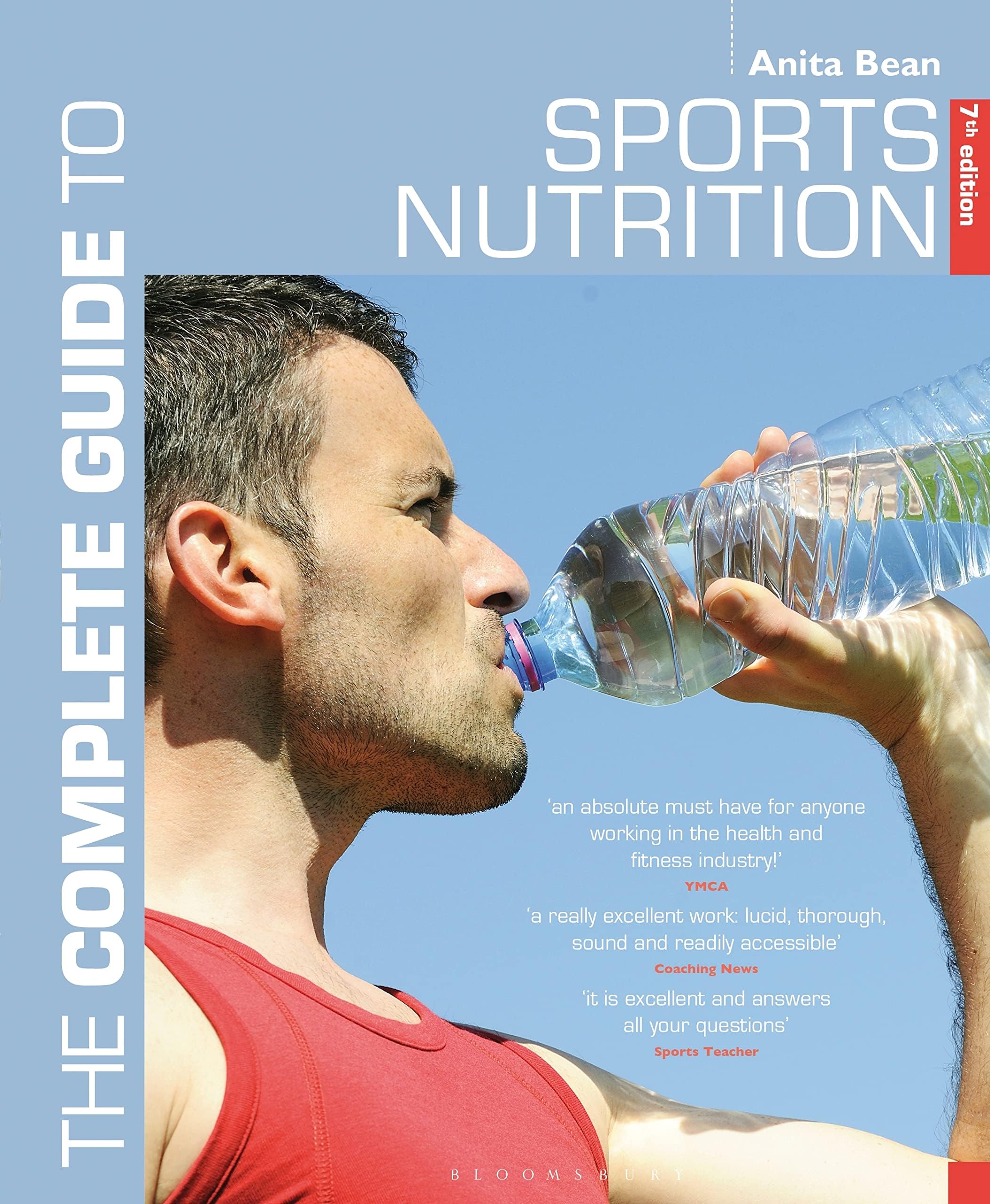
The Complete Guide to Sports Nutrition : Anita Bean: desertcart.co.uk: Books Review: Excellent - As a mid pack runner I found this book invaluable to help me know how to fuel when I'm running up to 70 miles per week. It is an excellent book, it is aimed mainly at the keen endurance athlete but it also very useful if you are looking to add lean muscle or loss excess body fat in order to improve race times. It is a very easy to read book and cuts through the jargon and clutter you can find in many health magazines. The book clearly explains how and when to take certain types of foods to maximise performance. At the end of every chapter the main points are listed this makes the information much easier to remember. At the back of the book there are a selection of easy to follow recipes which are very useful. A must buy for any keen sports person. Review: Excellent book! - I used this book lots during my Nutrition degree. The science is very well explained and everything is well broken down into sections so it's an easy book to use. There's lots of information on how to tailor your own diet to your sport specifics/activity level. I would highly recommend this book to students and professionals, those with an interest in sports would also find this useful! Great book!
| Best Sellers Rank | 1,265,663 in Books ( See Top 100 in Books ) 421 in Hockey Coaching 459 in Golf Coaching 486 in Tennis Coaching |
| Customer reviews | 4.6 4.6 out of 5 stars (133) |
| Dimensions | 18.8 x 2.03 x 22.86 cm |
| Edition | 7th Revised edition |
| ISBN-10 | 140817457X |
| ISBN-13 | 978-1408174579 |
| Item weight | 898 g |
| Language | English |
| Print length | 336 pages |
| Publication date | 14 Mar. 2013 |
| Publisher | Bloomsbury Sport |
J**K
Excellent
As a mid pack runner I found this book invaluable to help me know how to fuel when I'm running up to 70 miles per week. It is an excellent book, it is aimed mainly at the keen endurance athlete but it also very useful if you are looking to add lean muscle or loss excess body fat in order to improve race times. It is a very easy to read book and cuts through the jargon and clutter you can find in many health magazines. The book clearly explains how and when to take certain types of foods to maximise performance. At the end of every chapter the main points are listed this makes the information much easier to remember. At the back of the book there are a selection of easy to follow recipes which are very useful. A must buy for any keen sports person.
C**S
Excellent book!
I used this book lots during my Nutrition degree. The science is very well explained and everything is well broken down into sections so it's an easy book to use. There's lots of information on how to tailor your own diet to your sport specifics/activity level. I would highly recommend this book to students and professionals, those with an interest in sports would also find this useful! Great book!
A**N
Good but marred by errors and surplus padding
This deservedly popular book covers pretty much everything any active person interested in eating for health and performance might wish to know. It contains an excellent overview of the human nutrition cycle, and explains in detail the various functions of our primary fuels: carbohydrates, fats, and proteins. There is a chapter on sports supplements - a good source of information and cautionary advice for anyone who might be persuaded by the clever marketing of allegedly wonder products. I was pleased to discover that the hydration chapter covered the problems of OVER-hydration. . Subsequent chapters cover weight gain, weight loss, female issues, sports nutrition for minors, the vegetarian sportsperson, and competition nutrition (the latter is largely a summary of the first two chapters) The glycaemic index and glycaemic load of common foods, along with a glossary of vitamins and minerals, are provided in the appendices. For people who wish to check sources referred to in the book there are twenty pages of references plus a short list of suggested further reading. In all, pretty comprehensive. However, the book would be improved greatly by having it properly proofed (in order to remove/correct contradictory information that only serves to confuse the reader) and enhanced further by editing out all the repetitious text, adding a glossary of terms and abbreviations, and by expanding the index to include these terms. Some examples: On several occasions Bean states that the liver and muscles can store about 100g and 400g glycogen respectively (figures based on an average 70 kg person). However, she states elsewhere that the muscles store about THREE times as much glycogen as the liver. So which is it, three times as much or four times as much? Only a minor discrepancy albeit one that would have been easily rectified by thorough proofing. It creates a little uncertainty in the reader, so that other statements are then viewed with suspicion. Elsewhere Bean states that there is roughly 300g-400g of fat contained within the muscles. At a typical 9 kcal of energy per gram of fat, this would suggest intra-muscular fat contains 2700-3600 kcal of energy (confirmed in other texts on the subject) whereas the author gives a figure of 350 kcal, an error of one order of magnitude. Given so much of the advice contained within the book is based on actual amounts (grams, kcals etc) of carbohydrates, fats and proteins, there is an imperative to get the numbers right. In a later part of the book, Bean advises on the appropriate carbohydrate-loading regime prior to a competition/sporting event. She outlines three such regimes. In the final one (depicted by table 3.8) the text advises normal diet followed by moderate carbohydrate intake for three days followed by high carb intake for a further three days. Yet in the table itself, the three `moderate' days are labelled as `low carbohydrate', clearly at odds with the text. Another confusing proofing oversight (not very impressive when you consider this book is now in its seventh edition). My other main criticism is that Bean repeats herself rather a lot, particular with respect to text boxes containing summaries (which in a number of cases simply regurgitate existing text word for word). Diligent editing would have seen a number of paragraphs removed. I would have liked to see a detailed explanation of VO2 max (variously described elsewhere as maximal oxygen consumption, maximal oxygen uptake, peak oxygen uptake or maximal aerobic capacity) as the author makes reference to this - without any elaboration - on a number of occasions. Given the large number of abbreviations employed in the book, a glossary of these (rather than the brief list provided) would have been useful. In spite of the criticisms, I would certainly recommend this book. But with just a little fine tuning and whittling away of the surplus padding, the book would have performed even better! Next edition maybe?
G**N
"Ronseal" book on sports nutrition
An unambiguous and clearly written publication. Provides straight forward information in a well referenced format - no confusion here - unlike trawling for information on the internet. Daily nutritional requirements are easy to calculate and can be tailored according to the individuals need: fat loss, lean muscle gain or weight maintenance. I'd highly recommend this book. There's even an appendix section with sample daily menus and recipes with detailed nutritional information; a fantastic starting point for getting your nutrition spot on.
M**E
Great starting point for those looking to further knowledge
Covers all bases. If you need to elaborate you can search for specific studies on google. A great reference for anyone in the fitness industry or starting out in a sport that will require expansion of knowledge within their nutritional habits and quantities they will require to maximise their training. Great for note taking too and an easy port of call for questions asked by clients.
M**E
simple sensible advise
This book is filled with sensible nutritional advice that is easy to digest (excuse the pun). The focus is on tested / researched facts rather than fads and gimmicks. The sections on how the body gets energy from fuel helps determine which nutritional approaches will work best for a given sport. The scientific references are handy for those that want to dig deeper.
D**N
Informative read.
A great read and journey into the scientific world of nutrition also health and well being, very much worth getting.
J**N
Easy read
Very user friendly and useful if you have no idea about nutrition. Bought as a teaching aid and fullfilled its role.
M**A
The book was received in excellent conditions.
L**G
This is really good manual for practical use. It is easy to understand what and when to eat for best result. Recommended for everybody
M**K
Great book but wish the calculations were more thorough. Overall, great resource
M**A
Great book
Trustpilot
Hace 2 semanas
Hace 2 meses