We remain fully operational. Our teams are working around the clock to ensure your deliveries continue safely.

Descargar la aplicación


Servicios al cliente
Sobre nosotros
Copyright © 2025 Desertcart Holdings Limited
Descargar la aplicación
Buy anything from 5,000+ international stores. One checkout price. No surprise fees. Join 2M+ shoppers on Desertcart.
Desertcart purchases this item on your behalf and handles shipping, customs, and support to British Virgin Islands.
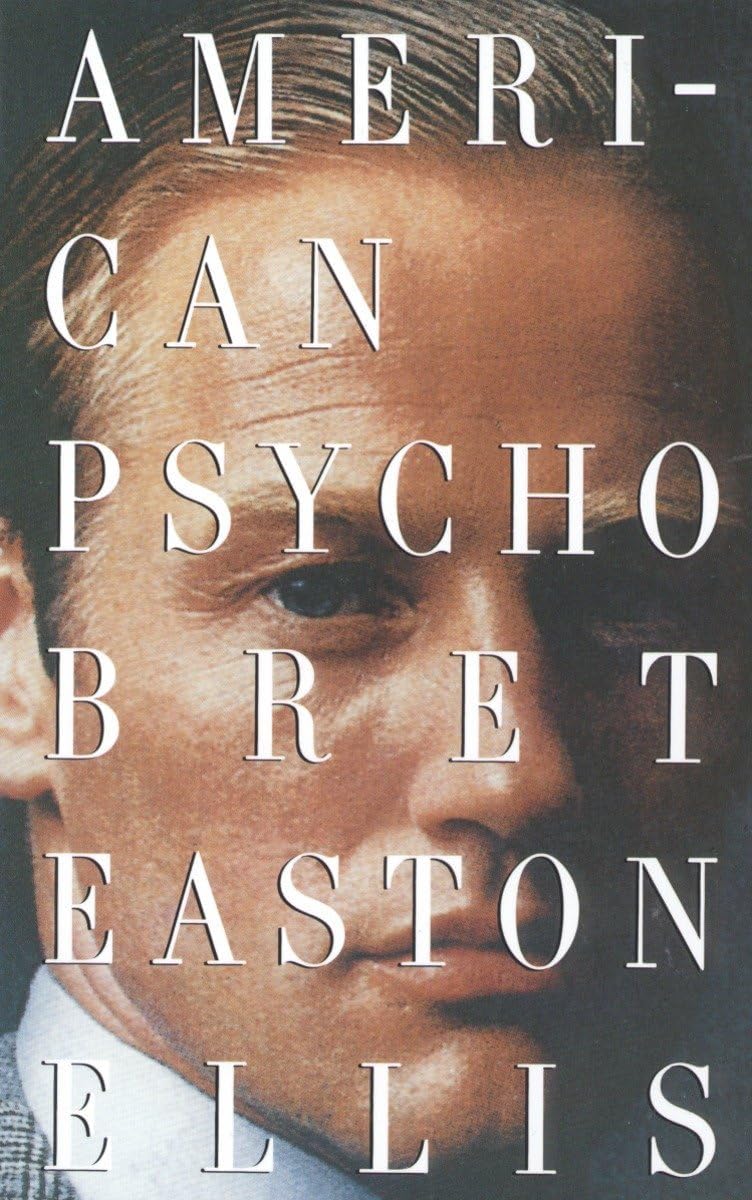
American Psycho (Vintage Contemporaries) [Ellis, Bret Easton] on desertcart.com. *FREE* shipping on qualifying offers. American Psycho (Vintage Contemporaries) Review: MISOGYNISTIC. CONTROVERSIAL. GRATUITOUS. SENSATIONAL AWESOMENESS - Bret Easton Ellis’ novel, American Psycho, has just about as a precarious history as the contents held within its blood splattered pages. First released by Simon & Schuster in early 1991 and soon after quickly sold to Vintage by the publisher for undisclosed reasons and for an undisclosed sum of money. For us folks doing a review in 2015, almost a quarter of a century down the road, this sounds quite bizarre for a publisher to boot such a phenomenal piece of horror fiction -- however, apparently during the early 90’s, American Psycho was received a tad bit differently than one might expect today. Today, American Psycho is heralded as a postmodern cult classic, used no less in hip English lit classes and sociology classes, hell maybe even psychology classes, and if teachers were really smart, criminology classes! Its very strange looking back at American Psycho’s first release and reading all the vile contemptuous swings reviewers and readers and the media alike took at Ellis. Especially considering how during the same year Silence of the Lambs was released theatrically and went on to win dozens of awards, including: The Academy Award for Best Picture, Best Actor, Best Director, etc. etc. How can a movie and book about cannibalism, the most taboo thing imaginable, shine with audiences while at the same time American Psycho can be chased away by a mob with flaming torches and pitch forks? According to Ellis, who stated in a somewhat recent interview, “It was feminists and The New York Times. Hand-wringing liberals [who] were upset about ‘American Psycho.’ I don't think there was a single peep from conservatives or anyone like that. It was a liberal witch hunt and I was at the center of it” (The Oregonian, 2010). In a previous interview with Roger Cohen, from the New York Times, back during his books initial release, in response to the numerous death threats he had received in the mail, Mr. Ellis said that he “had no idea the novel would provoke the reception it's gotten, and I still don't quite get it” (New York Times, 1991). It is so bizarre how Anthony Hopkins chewing some dudes face off can be considered highbrow, while American Psycho, which had more to say regarding the quiet submission to consumerism and desensitization of the silent majority than any other work of fiction at the time, can be held with such contempt. In retrospect of heavy criticisms, Mr. Ellis follows with one of the most profound statements regarding the craft of writing, something I believe all writers should well remember, when he states: “You do not write a novel for praise, or thinking of your audience. You write for yourself; you work out between you and your pen the things that intrigue you” (New York Times, 1991). And with American Psycho, as this humble reviewer understands it, Ellis was “working out” how society during the late 1980’s had considered the “surface” things, such as: food, clothes, money, etc., to be the only means in which a person can be defined. And this comment on society becomes obviously apparent and satirically metaphorical when you begin to read his book. In the very first pages, Ellis numbs the mind by using the narrator, Patrick Bateman, who also so happens to be a complete lunatic, to list off in excruciating detail all the many “surface” things he sees on the day to day, such as: designer suits, Walkman’s, music, movies, furniture, TV shows, restaurants, food, etc., etc. These things are important to him, while at the same time, not important. Even the murders are so brutally detailed, eventually at least (the book does have a sense of pace to it), that we become, in a way, desensitized to the violence just as much as we are desensitized to the material. Everything becomes banal. Here is what Pat Bateman has to say for himself towards the end of the book after he emerges from a near-psychotic break: “There is an idea of a Patrick Bateman, some kind of abstraction, but there is no real me, only an entity, something illusory, and though I can hide my cold gaze and you can shake my hand and feel flesh gripping yours and maybe you can even sense our lifestyles are probably comparable: I simply am not there…” (American Psycho, pgs. 376-377). The above statement was made popular with the release of the theatrical version of the book, staring Christian Bale, back in 2000. And the madman goes on, of course. Bateman questions the very banality of evil, “is evil something we are or something we do?” etc. etc. And by the end, he finds what we “normal” folks might consider to be the deeper things in life, such as: war and politics, family, discoveries, sunrises, heroes, falling in love, blah-blah-blah, to be also utterly dull. Bateman can only find one clear emotion within him, greed – oh and perhaps, as he suggested -- disgust. The most pungent scene, for me, that invokes this macabre bland worldview is at the beginning of the book. Patrick is waiting on Patricia who so happens to be late for their date. When she finally arrives, Patrick narrates, nonchalantly, that she is safe from his knife, safe from him cutting open her throat and watching her bleed with mild disinterest, not because of any kind of luck, and not really because she comes from a wealthy stock, but simply and callously because Bateman made the choice. Bateman states: “Patricia will stay alive, and this victory requires no skill, no leaps of the imagination, no ingenuity on anyone’s part. This is simply how the world, my world, moves” (American Psycho, pg. 282). When I first read this line…my bones were chilled by the eerie ordinariness of it. The stylization is so humdrum you can actually feel madness slipping on like an old pair of slippers as you read the narrators ghastly horrific plunge further down into the rabbit-hole. When he finally emerges, you’re expecting some earth shattering revelation, but his only revelation is that nothing matters. It is what it is. He is what he is. The world is what it is. And there is nothing special in that. And there is nothing special in monotony. When thinking what American Psycho means to me in 2015, I’m struck by an overwhelming sadness in how some horror books and movies are never appreciated in their day. The heinous reception of American Psycho in 1991 and how it has now become this beloved cult classic reminds me so much of John Carpenter’s adaptation of “Who Goes There” with The Thing (1982). Both were completely hated and bashed by not only critics (which we should expect) but also by audiences. American Psycho stands out to me, not only because of its quip attitude toward yuppie culture during the 1980’s, an excellent timepiece for modern day writers to resource, but also because you can feel the character, the crazed loon, desperately trying to be normal even though he is anything but normal, till the end when he finally snaps and the story whips from first person to third and finally back to first when Pat Bateman realizes there is no “normal.” It’s oddly human and somewhat farcical, something we might even call dark comedy. Everyone around Bateman is, in a lot of ways, similar to one another. They have little to no empathy towards others, not even with each other. This is often seen in not only how they talk and what they discuss, what’s of importance to them, but in how grossly they mistreat the homeless, which during the 80’s was witness to some of the highest percentages in American history. And the very same brutal detail in what they wear and what they eat and who they sleep with. In this, they are mirror images. The only difference, the only way Patrick sets himself apart, is his murderous and sexual appetites (though you could argue his sexual desires are also in line with everyone else). But this is all beneath the “surface,” and when it comes to the criticisms of the book, perhaps those same voices who threatened Bret’s life could only see what was floating on top. On the “surface” are the boring albeit grim details of every little aspect in Pat Bateman’s life, the clothes, the music, the food, the women, and even the way he imagines lacerating those same women. Beneath are metaphors, how we see society, how we place value on meaningless things, how we look at those around us as things, how we’ve become completely callous toward suffering. This is why the book is still so popular and important for readers today. If we can get past the brutality and sink our heads beneath the lapping waves of the mundane, to peer into the depths of consequentialism, for a moment at least, before we’re gasping up for air, we can walk away with some realization or dare I say an awakening. If even for only a moment. If you have yet to read Bret Easton Ellis’ 1991 masterpiece, American Psycho -- well, as the saying goes: there is no time like the present. Just be forewarned that the book is written from the first person perspective. Today, few stories are told from the first person narration. Personally, the only first person stories I’ve read are Lovecraftian. However, I suggest you give the book a fair amount of patience. And patience you will need. As mentioned in my review above, the author goes into grave detail about everything. You will be numbed -- but isn’t that the point? Review: My favorite novel of all time - The 80s: a time period defined by surface, cut throat capitalism, Reagan economics, Wall Street, cocaine, AIDS, night clubs, awesome pop music, and serial killers. This is the setting of Bret Easton Ellis’s most controversial novel, American Psycho, which when published in 1991, garnered an F review in Entertainment Weekly, put Ellis on the FBI’s watchlist, and infuriated a radical feminist named Tara Baxter. American Psycho is about the infamous Patrick Bateman--Wall Street yuppie--whose extracurricular activities included clubbing; snorting coke; dining at New York City’s finest restaurants; purchasing overpriced sunglasses, suits, brief cases, bottled water, Walkman headphones; and murdering prostitutes, animals, co-workers, and the homeless. With graphic and detailed descriptions that include sadomasochism, decapitations, eviscerations, dismemberment, and torture, it is no wonder American Psycho garnered so much controversy. In today’s culture (that has created a genre of film called torture porn), such a novel would probably not get national attention. But in 1991, before the novel was even published, the controversy was nearly as hostile as the protagonist. Most of American Psycho’s criticism has come from the fact that it depicts scenes that are disgusting, vile, crude, and immoral. What these critics fail to mention is that the novel itself is a looking-glass, reflecting a society that is itself disgusting, vile, crude, and immoral. What the novel does not do, to any extent, is shy away from truth or sugarcoat the ugliness of a society obsessed with surface and possessions; a society overcome by greed. In the late 70s and in the 80s, America experienced a string of serial killers (Bundy, Gacy, and Manson), that both terrified and fascinated Americans. Nothing quite captures America’s attention like murder. And this is exactly why Patrick Bateman, the antihero of the novel, is a serial killer set in a time period gripped with greed and fear. Patrick Bateman is not the only sociopath in the novel. In fact, they populate the streets of New York City, the law firms, the finest restaurants and clubs. They are soulless individuals who do not care about others, only advancing themselves, only possessing, and accumulating more wealth. They are individuals who use others to their own advantage. In American Psycho, they are Wall Street yuppies, the upper class, the Marxist bourgeoisie--who destroy and use the unfortunate (homeless, prostitutes, children) so they can live in excess. One reoccurring theme throughout the novel is that Patrick Bateman and his yuppie friends often mistake their co-workers for other co-workers, since there is no distinct individuality, only conformity to an ideal surface. No one really knows who anyone else is; as Patrick Bateman states, “Inside doesn’t matter." They are so self-absorbed that they do not take time to notice anyone outside themselves or their possessions, unless a source of ridicule or competition. Patrick Bateman, competing for the Fischer Account (which is never clearly explained, except for the fact that it is the best account), literally axes a co-worker named Paul Owen in the face, in order to get ahead. Talk about cut throat capitalism! The graphic, deplorable scenes of violence in Bret Easton Ellis’ American Psycho serve a purpose: to illustrate the inhumanity of a society that puts its value in objects instead of people. Or rather, treats people as objects. The murders and the sex scenes are not the only thing described in pornographic detail. Patrick Bateman is a character sick with obsession; obsession with all the wrong things. In many scenes, Bateman describes, in pornographic detail, his wardrobe, his apartment, brands of bottled water, his music collection, the food at his favorite restaurants. These are the things that consume not only Patrick, but his cohorts. In fact, one could say that a surface obsessed society creates monsters like Bateman. In a society gripped by fear, whose only solace is found in possessing and dominating, there is nowhere to go but down: into madness, psychosis; anything to try and feel, to escape the void. In a chapter entitled “Tries to Cook and Eat Girl,” Ellis underlines the only real thing that can fill the void: Bateman attempts to turn a dead girl into meat loaf, but then he starts to cry: “The smell of meat and blood clouds up the condo until I don’t notice it anymore. And later my macabre joy sours and I’m weeping for myself, unable to find solace in any of this, crying out, sobbing ‘I just want to be loved’” (Ellis 345). This scene is gross and disturbing, but in some sick, morbid way—you may feel empathy for Patrick. There is only one thing that can fill the hole in Bateman’s consumer-obsessed soul: love. But, living in the society in which he does, love is an illusory concept, just like truth, compassion, and morals. In this society, there is only one truth: nothing matters—except money. In this society, there is no love and there is no escape from one’s emptiness.

| Best Sellers Rank | #7,432 in Books ( See Top 100 in Books ) #43 in Fiction Satire #344 in Literary Fiction (Books) #1,210 in Mystery, Thriller & Suspense (Books) |
| Customer Reviews | 4.3 4.3 out of 5 stars (14,736) |
| Dimensions | 5.2 x 0.96 x 7.99 inches |
| Edition | First Edition |
| ISBN-10 | 0679735771 |
| ISBN-13 | 978-0679735779 |
| Item Weight | 2.31 pounds |
| Language | English |
| Print length | 399 pages |
| Publication date | March 1, 1991 |
| Publisher | Vintage |
T**S
MISOGYNISTIC. CONTROVERSIAL. GRATUITOUS. SENSATIONAL AWESOMENESS
Bret Easton Ellis’ novel, American Psycho, has just about as a precarious history as the contents held within its blood splattered pages. First released by Simon & Schuster in early 1991 and soon after quickly sold to Vintage by the publisher for undisclosed reasons and for an undisclosed sum of money. For us folks doing a review in 2015, almost a quarter of a century down the road, this sounds quite bizarre for a publisher to boot such a phenomenal piece of horror fiction -- however, apparently during the early 90’s, American Psycho was received a tad bit differently than one might expect today. Today, American Psycho is heralded as a postmodern cult classic, used no less in hip English lit classes and sociology classes, hell maybe even psychology classes, and if teachers were really smart, criminology classes! Its very strange looking back at American Psycho’s first release and reading all the vile contemptuous swings reviewers and readers and the media alike took at Ellis. Especially considering how during the same year Silence of the Lambs was released theatrically and went on to win dozens of awards, including: The Academy Award for Best Picture, Best Actor, Best Director, etc. etc. How can a movie and book about cannibalism, the most taboo thing imaginable, shine with audiences while at the same time American Psycho can be chased away by a mob with flaming torches and pitch forks? According to Ellis, who stated in a somewhat recent interview, “It was feminists and The New York Times. Hand-wringing liberals [who] were upset about ‘American Psycho.’ I don't think there was a single peep from conservatives or anyone like that. It was a liberal witch hunt and I was at the center of it” (The Oregonian, 2010). In a previous interview with Roger Cohen, from the New York Times, back during his books initial release, in response to the numerous death threats he had received in the mail, Mr. Ellis said that he “had no idea the novel would provoke the reception it's gotten, and I still don't quite get it” (New York Times, 1991). It is so bizarre how Anthony Hopkins chewing some dudes face off can be considered highbrow, while American Psycho, which had more to say regarding the quiet submission to consumerism and desensitization of the silent majority than any other work of fiction at the time, can be held with such contempt. In retrospect of heavy criticisms, Mr. Ellis follows with one of the most profound statements regarding the craft of writing, something I believe all writers should well remember, when he states: “You do not write a novel for praise, or thinking of your audience. You write for yourself; you work out between you and your pen the things that intrigue you” (New York Times, 1991). And with American Psycho, as this humble reviewer understands it, Ellis was “working out” how society during the late 1980’s had considered the “surface” things, such as: food, clothes, money, etc., to be the only means in which a person can be defined. And this comment on society becomes obviously apparent and satirically metaphorical when you begin to read his book. In the very first pages, Ellis numbs the mind by using the narrator, Patrick Bateman, who also so happens to be a complete lunatic, to list off in excruciating detail all the many “surface” things he sees on the day to day, such as: designer suits, Walkman’s, music, movies, furniture, TV shows, restaurants, food, etc., etc. These things are important to him, while at the same time, not important. Even the murders are so brutally detailed, eventually at least (the book does have a sense of pace to it), that we become, in a way, desensitized to the violence just as much as we are desensitized to the material. Everything becomes banal. Here is what Pat Bateman has to say for himself towards the end of the book after he emerges from a near-psychotic break: “There is an idea of a Patrick Bateman, some kind of abstraction, but there is no real me, only an entity, something illusory, and though I can hide my cold gaze and you can shake my hand and feel flesh gripping yours and maybe you can even sense our lifestyles are probably comparable: I simply am not there…” (American Psycho, pgs. 376-377). The above statement was made popular with the release of the theatrical version of the book, staring Christian Bale, back in 2000. And the madman goes on, of course. Bateman questions the very banality of evil, “is evil something we are or something we do?” etc. etc. And by the end, he finds what we “normal” folks might consider to be the deeper things in life, such as: war and politics, family, discoveries, sunrises, heroes, falling in love, blah-blah-blah, to be also utterly dull. Bateman can only find one clear emotion within him, greed – oh and perhaps, as he suggested -- disgust. The most pungent scene, for me, that invokes this macabre bland worldview is at the beginning of the book. Patrick is waiting on Patricia who so happens to be late for their date. When she finally arrives, Patrick narrates, nonchalantly, that she is safe from his knife, safe from him cutting open her throat and watching her bleed with mild disinterest, not because of any kind of luck, and not really because she comes from a wealthy stock, but simply and callously because Bateman made the choice. Bateman states: “Patricia will stay alive, and this victory requires no skill, no leaps of the imagination, no ingenuity on anyone’s part. This is simply how the world, my world, moves” (American Psycho, pg. 282). When I first read this line…my bones were chilled by the eerie ordinariness of it. The stylization is so humdrum you can actually feel madness slipping on like an old pair of slippers as you read the narrators ghastly horrific plunge further down into the rabbit-hole. When he finally emerges, you’re expecting some earth shattering revelation, but his only revelation is that nothing matters. It is what it is. He is what he is. The world is what it is. And there is nothing special in that. And there is nothing special in monotony. When thinking what American Psycho means to me in 2015, I’m struck by an overwhelming sadness in how some horror books and movies are never appreciated in their day. The heinous reception of American Psycho in 1991 and how it has now become this beloved cult classic reminds me so much of John Carpenter’s adaptation of “Who Goes There” with The Thing (1982). Both were completely hated and bashed by not only critics (which we should expect) but also by audiences. American Psycho stands out to me, not only because of its quip attitude toward yuppie culture during the 1980’s, an excellent timepiece for modern day writers to resource, but also because you can feel the character, the crazed loon, desperately trying to be normal even though he is anything but normal, till the end when he finally snaps and the story whips from first person to third and finally back to first when Pat Bateman realizes there is no “normal.” It’s oddly human and somewhat farcical, something we might even call dark comedy. Everyone around Bateman is, in a lot of ways, similar to one another. They have little to no empathy towards others, not even with each other. This is often seen in not only how they talk and what they discuss, what’s of importance to them, but in how grossly they mistreat the homeless, which during the 80’s was witness to some of the highest percentages in American history. And the very same brutal detail in what they wear and what they eat and who they sleep with. In this, they are mirror images. The only difference, the only way Patrick sets himself apart, is his murderous and sexual appetites (though you could argue his sexual desires are also in line with everyone else). But this is all beneath the “surface,” and when it comes to the criticisms of the book, perhaps those same voices who threatened Bret’s life could only see what was floating on top. On the “surface” are the boring albeit grim details of every little aspect in Pat Bateman’s life, the clothes, the music, the food, the women, and even the way he imagines lacerating those same women. Beneath are metaphors, how we see society, how we place value on meaningless things, how we look at those around us as things, how we’ve become completely callous toward suffering. This is why the book is still so popular and important for readers today. If we can get past the brutality and sink our heads beneath the lapping waves of the mundane, to peer into the depths of consequentialism, for a moment at least, before we’re gasping up for air, we can walk away with some realization or dare I say an awakening. If even for only a moment. If you have yet to read Bret Easton Ellis’ 1991 masterpiece, American Psycho -- well, as the saying goes: there is no time like the present. Just be forewarned that the book is written from the first person perspective. Today, few stories are told from the first person narration. Personally, the only first person stories I’ve read are Lovecraftian. However, I suggest you give the book a fair amount of patience. And patience you will need. As mentioned in my review above, the author goes into grave detail about everything. You will be numbed -- but isn’t that the point?
J**R
My favorite novel of all time
The 80s: a time period defined by surface, cut throat capitalism, Reagan economics, Wall Street, cocaine, AIDS, night clubs, awesome pop music, and serial killers. This is the setting of Bret Easton Ellis’s most controversial novel, American Psycho, which when published in 1991, garnered an F review in Entertainment Weekly, put Ellis on the FBI’s watchlist, and infuriated a radical feminist named Tara Baxter. American Psycho is about the infamous Patrick Bateman--Wall Street yuppie--whose extracurricular activities included clubbing; snorting coke; dining at New York City’s finest restaurants; purchasing overpriced sunglasses, suits, brief cases, bottled water, Walkman headphones; and murdering prostitutes, animals, co-workers, and the homeless. With graphic and detailed descriptions that include sadomasochism, decapitations, eviscerations, dismemberment, and torture, it is no wonder American Psycho garnered so much controversy. In today’s culture (that has created a genre of film called torture porn), such a novel would probably not get national attention. But in 1991, before the novel was even published, the controversy was nearly as hostile as the protagonist. Most of American Psycho’s criticism has come from the fact that it depicts scenes that are disgusting, vile, crude, and immoral. What these critics fail to mention is that the novel itself is a looking-glass, reflecting a society that is itself disgusting, vile, crude, and immoral. What the novel does not do, to any extent, is shy away from truth or sugarcoat the ugliness of a society obsessed with surface and possessions; a society overcome by greed. In the late 70s and in the 80s, America experienced a string of serial killers (Bundy, Gacy, and Manson), that both terrified and fascinated Americans. Nothing quite captures America’s attention like murder. And this is exactly why Patrick Bateman, the antihero of the novel, is a serial killer set in a time period gripped with greed and fear. Patrick Bateman is not the only sociopath in the novel. In fact, they populate the streets of New York City, the law firms, the finest restaurants and clubs. They are soulless individuals who do not care about others, only advancing themselves, only possessing, and accumulating more wealth. They are individuals who use others to their own advantage. In American Psycho, they are Wall Street yuppies, the upper class, the Marxist bourgeoisie--who destroy and use the unfortunate (homeless, prostitutes, children) so they can live in excess. One reoccurring theme throughout the novel is that Patrick Bateman and his yuppie friends often mistake their co-workers for other co-workers, since there is no distinct individuality, only conformity to an ideal surface. No one really knows who anyone else is; as Patrick Bateman states, “Inside doesn’t matter." They are so self-absorbed that they do not take time to notice anyone outside themselves or their possessions, unless a source of ridicule or competition. Patrick Bateman, competing for the Fischer Account (which is never clearly explained, except for the fact that it is the best account), literally axes a co-worker named Paul Owen in the face, in order to get ahead. Talk about cut throat capitalism! The graphic, deplorable scenes of violence in Bret Easton Ellis’ American Psycho serve a purpose: to illustrate the inhumanity of a society that puts its value in objects instead of people. Or rather, treats people as objects. The murders and the sex scenes are not the only thing described in pornographic detail. Patrick Bateman is a character sick with obsession; obsession with all the wrong things. In many scenes, Bateman describes, in pornographic detail, his wardrobe, his apartment, brands of bottled water, his music collection, the food at his favorite restaurants. These are the things that consume not only Patrick, but his cohorts. In fact, one could say that a surface obsessed society creates monsters like Bateman. In a society gripped by fear, whose only solace is found in possessing and dominating, there is nowhere to go but down: into madness, psychosis; anything to try and feel, to escape the void. In a chapter entitled “Tries to Cook and Eat Girl,” Ellis underlines the only real thing that can fill the void: Bateman attempts to turn a dead girl into meat loaf, but then he starts to cry: “The smell of meat and blood clouds up the condo until I don’t notice it anymore. And later my macabre joy sours and I’m weeping for myself, unable to find solace in any of this, crying out, sobbing ‘I just want to be loved’” (Ellis 345). This scene is gross and disturbing, but in some sick, morbid way—you may feel empathy for Patrick. There is only one thing that can fill the hole in Bateman’s consumer-obsessed soul: love. But, living in the society in which he does, love is an illusory concept, just like truth, compassion, and morals. In this society, there is only one truth: nothing matters—except money. In this society, there is no love and there is no escape from one’s emptiness.
B**T
My honest review of the book American Psycho
American Psycho" by Bret Easton Ellis is a dark and intense satire that dives into the shallow, consumer-obsessed world of a 1980s Wall Street businessman. The book is famous for its extreme and graphic descriptions, which Ellis uses to show how the main character has become completely detached from reality and human emotion. It’s a challenging read that pushes boundaries, but it serves as a powerful critique of how a culture focused only on money and status can lose its soul.
N**B
It's an extremely dark read. This book took me to places I had no wish to go and never wish to return to. However, as a literary work I believe it has merit. Some reviewers here have complained about the one-dimensionality of the novel, the fact that there's no plot, there's no one to like, no-one to root for. Well, I'm sorry, but why should there be? To massage the reader's ego? To pander to his or her risk of boredom? It's my opinion that everything in this book has been very carefully considered by the author. The book is told through the first person p.o.v of Patrick Bateman, who is a self-admitted psychopath whose "mask of sanity" is slipping more and more as the book unfolds. Thus we see everything through his eyes, and the flat, emotion-free witness of his mind. For instance no mention is ever made of how anyone feels. He has no empathy with others. All he can do is describe what he sees, surface, always surface. Hence the interminable lists of what everyone is wearing. Bateman both hides behind, and is comforted by the uniform of designer labels, the right accessories. He senses he needs to hide, and wants desperately to 'fit in'. At the same time that he can instantly recognize what everyone is wearing, he can hardly recognize who anyone else is. In the world of Wall Street he inhabits, everyone apparently looks the same. The novel is full of mistaken identity, not only by him, but by his fellow Wall Street workers, a fact which he exploits to his advantage. This not knowing who anybody is adds to the general sense of depersonalisation throughout the book, already a problem for Bateman. The author, at least for me, does a brilliant job of capturing the inner mind of a psychopath. For instance, he juxtaposes horrific or traumatic events (of which there are many) with mundane pronouncements from Bateman, for instance what he saw on tv that morning. A chapter which ends after a lengthy, detailed and harrowing description of torture and murder is followed by one discussing the talents of 80s popstars in equal and cheerful detail. This adds to the sense that Bateman can't relate to his crimes emotionally, has no remorse or sense of guilt. They are merely events which pass in his life, no more or less meaningful than other events, a tv show or a new CD. It's quite a brilliant stylistic move by the author to pull this off. On the subject of the murders, I must here warn the unwary reader. Having seen the movie version several years ago, which kind-of glosses over those parts of the book, I was unprepared for the level of detail and forensic description here-in. In some ways it's a novel of 2 halves, the first half being quite a mundane and reasonably sane description of the minutae of Bateman's affluent New York lifestyle. It starts to lull you after a while, and when the horror eventually begins it's a genuine shock. And it is truly horrific. In fact I can't think of another book to match it. I consider myself quite broadminded but I had a couple of moments when I actually felt physically queasy while reading. But I didn't see the violence as gratuitous., as some have, merely there to shock. It all adds to the portrait of Bateman the psychopath that is the book's goal. Is it, as many have said, a satire on 80s culture and the yuppie lifestyle? Perhaps it can be read that way, but I don't think it has to be to have worth. It's a brilliantly imagined, conceived and written portrait of a diseased psychopathic character, sometimes tragic, sometimes comic, sometimes monstrous. Another brilliant move Ellis pulls sis somehow to have Bateman remain, if not a likeable character, then somehow sympathetic. It's necessary, otherwise the reader wouldn't be able to stick with him to the end of the book. He is both terrifying and yet often vulnerable, sometimes even pathetic. It's not an easy thing for the author to pull off. I think he succeeds. Is there an obvious ending to the book? Does the monster receive justice at the hands of the authorities? Of course not. And good thing too. That would have been far too obvious and moralistic for a book like this. At one point mid way through the book he has to face an interview from a detective, during which he completely panics, and reader expectation is that he will eventually be caught, but it leads to nothing. His status and wealth is a disguise seemingly impossible to penetrate. Even when he comes out and confesses to people his crimes, which he often does, they don't really hear or believe him, thinking it a dark joke. One reading of the book, and the way the film played it, is that all the horror is merely Bateman's fantasy and never actually occurs. But this is never explicitly spelt out. It's not the way I read it. The way I see it I think Bateman really does these things, and no-one around him can see it. I think sometimes he wishes someone would see him for what he is, but is doomed to be forever misunderstood, unrecognized. It's quite a brilliant book, and rewards careful reading, but you have been warned: not for the fainthearted!
S**X
Finished it in 3 days then regretted not taking my time with it.
A**B
Wow... mais qu'est-ce que je viens de lire?... Je me souviens avoir tenté de lire American Psycho adolescente... et d'avoir laissé tombé car la lecture en avait été très pénible. Ce livre c'est, à travers les yeux de Patrick Bateman, le reflet d'une société du paraître déshumanisée, où l'argent est roi, où l'on peut du premier coup d'oeil distinguer un costume Dior d'un Armani mais où personne ne se rappelle le nom de son collègue de travail. American Psycho c'est aussi le reflet d'une société à 100 à l'heure mais où l'ennui est profond. Dans un quotidien millimétré entre salle de sport, restaurants chics et boites de nuit, la narration est pourtant lourde et nauséeuse, détaillant les vêtements pendant des lignes et des lignes, racontant le quotidien de cette jeunesse dorée avec une platitude et une linéarité qui ne donnent qu'une envie: fermer ce livre pour de bon. American psycho c'est enfin et surtout l'histoire d'un psychopathe qui, derrière le masque respectable de la fortune, cache des pulsions de morts plus abjectes les unes que les autres. Beaucoup n'arrivent pas à finir ce roman car plus on avance dans la lecture, plus celle-ci devient lourde, malsaine. Tout y est décrit de façon lisse, stérile, clinique. Aucune émotion ne transparait dans la narration de Bateman (si ce n'est quelques crises d'angoisse quand son petit monde est bouleversé), aucune empathie, rien qu'une description froide que ce soit des vêtements, des repas mais aussi du sexe, des meurtres... Tout est au même niveau. C'est cette narration si distante qui rebute, ce vide profond du personnage. Car Bateman n'est rien, ne ressent rien. En cela il est presque mort et cela on le ressent rapidement dès les premiers chapitres. Même sans les scènes gore (et dieu sait que j'en lis du gore, pourtant les scènes d'American Psycho m'ont profondément perturbée) on se sent mal à l'aise. Bateman n'est pas normal, pas humain, pas vivant. Et il est très perturbant de suivre ses pensées. Plus le récit avance plus la confusion est grande. La lecture est de plus en plus angoissante car Bateman lui aussi perd les pédales. On en vient à se poser des questions: folie, fantasme? Où est la vérité? Que peut-on croire? Plus on lit et plus on se sent oppressé, confiné dans cet esprit malade, dégoûté de cette accumulation de richesses, de marques, de repas et ce vide émotionnel total. American Psycho est lourd, très lourd et très malsain. Un roman qui vous plombe. Ce n'est définitivement pas un livre à la portée de tout le monde. Mais c'est un livre qui en vaut la peine.
P**P
Great book
F**I
Amazing book, just as good as when I read it first a few years ago.
Trustpilot
Hace 1 mes
Hace 1 semana